Hurun Future Unicorns Global Gazelles Index 2024
The Hurun Research Institute today released the Hurun Future Unicorns – Global Gazelles Index 2024, a list of the world’s start-ups founded in the 2000s, not yet listed on a public exchange and most likely to ‘go unicorn’, i.e. hit a valuation of US$1bn, within three years. The cut-off date used was 31 October 2024. Hurun Research has been tracking Unicorns since 2017, Future Unicorns Gazelles si
HURUN FUTURE UNICORNS - GAZELLES 2024
IN SEARCH OF THE WORLD’S ‘GAZELLES’, START-UPS MOST LIKELY TO ‘GO UNICORN’ WITHIN 3 YEARS.
HURUN RESEARCH FINDS 803 GAZELLES IN THE WORLD, UP 115 OR 17% OVER LAST YEAR
USA RETAINED TOP SPOT WITH 330 GAZELLES, UP 83 OR 34%.
CHINA SECOND WITH 258 HURUN GAZELLES, UP 18% FROM 218. TOGETHER, THE USA AND CHINA ACCOUNTED FOR 73% OF HURUN GAZELLES.
UK THIRD WITH 45, UP THREE, AND INDIA FOURTH WITH 31, DOWN 17.
302 NEW FACES, LED BY US 163, CHINA 61 AND UK 17. BY SECTOR, BIOTECH 77, AI 29, HEALTHTECH 26.
91 HURUN GAZELLES PROMOTED OUT OF LAST YEAR’S LIST, LED BY 37 FROM THE US, 17 FROM CHINA AND 9 FROM INDIA. BIOTECH AND FINTECH LED, FOLLOWED BY SAAS.
45 WENT UNICORN, LED BY BERLIN-BASED HELSING (AI DEFENSE, US$5.4 BILLION), MUMBAI-BASED ZEPTO (QUICK COMMERCE, US$5 BILLION) AND ELON MUSK-FOUNDED NEURALINK (HEALTHTECH, US$5BN).
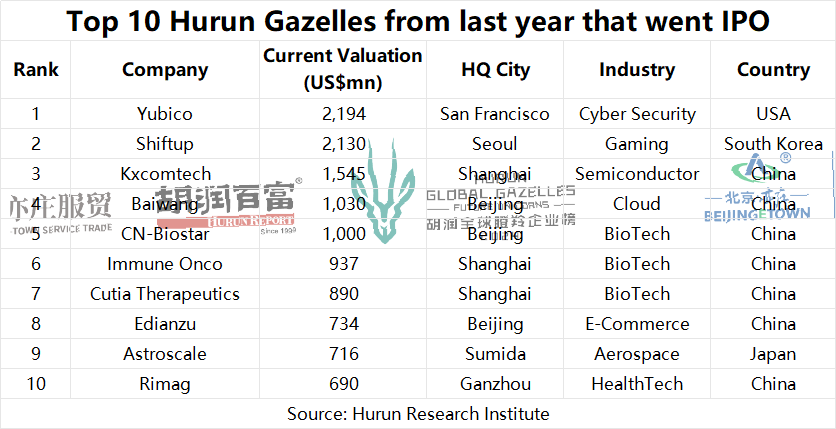
18 WENT IPO, LED BY YUBICO, A SAN FRANCISCO-BASED CYBERSECURITY FIRM, WITH A MARKET CAP OF US$2.2 BILLION.
95 ‘DEMOTED’, NO LONGER MAKING THE CUT, LED BY 43 FROM USA AND 19 FROM INDIA. DEMOTIONS CAME FROM FINTECH 22, E-COMMERCE 15 AND SAAS 10.
SHANGHAI OVERTOOK SAN FRANCISCO AS WORLD CAPITAL FOR HURUN GAZELLES. BEIJING THIRD AND NEW YORK FOURTH.
SAUDI ARABIA BROKE INTO THE TOP TWENTY WITH THREE NEW HURUN GAZELLES: E-COMMERCE PLATFORMS FLOWARD AND NANA, BASED IN RIYADH, AND SALLA, WHICH OPERATES IN MAKKAH. NEW ZEALAND, GREECE, AND CROATIA EACH HAD AT LEAST ONE HURUN GAZELLE FOR THE FIRST TIME THIS YEAR.
BIOTECH LED THE WAY WITH 140 HURUN GAZELLES, FOLLOWED BY FINTECH 81, SAAS 76, HEALTHTECH 69, AND ARTIFICIAL INTELLIGENCE 62.
37% DRIVEN BY AI.
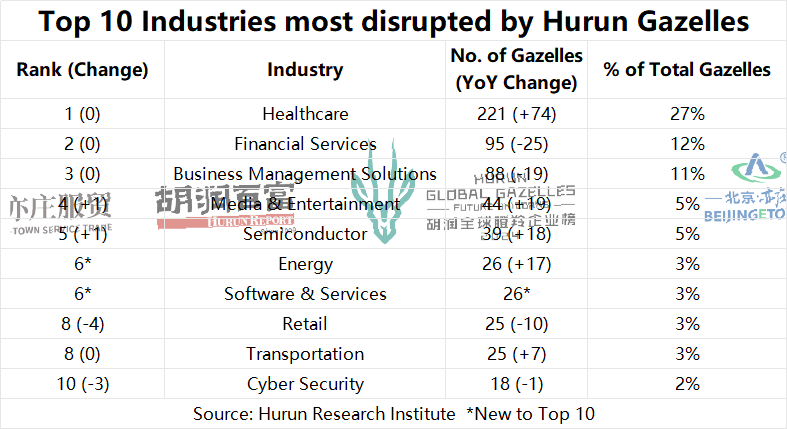
HEALTHCARE, WITH 221 HURUN GAZELLES, MOST DISRUPTED SECTOR, FOLLOWED BY FINANCIAL SERVICES WITH 95 AND BUSINESS MANAGEMENT SOLUTIONS WITH 88.
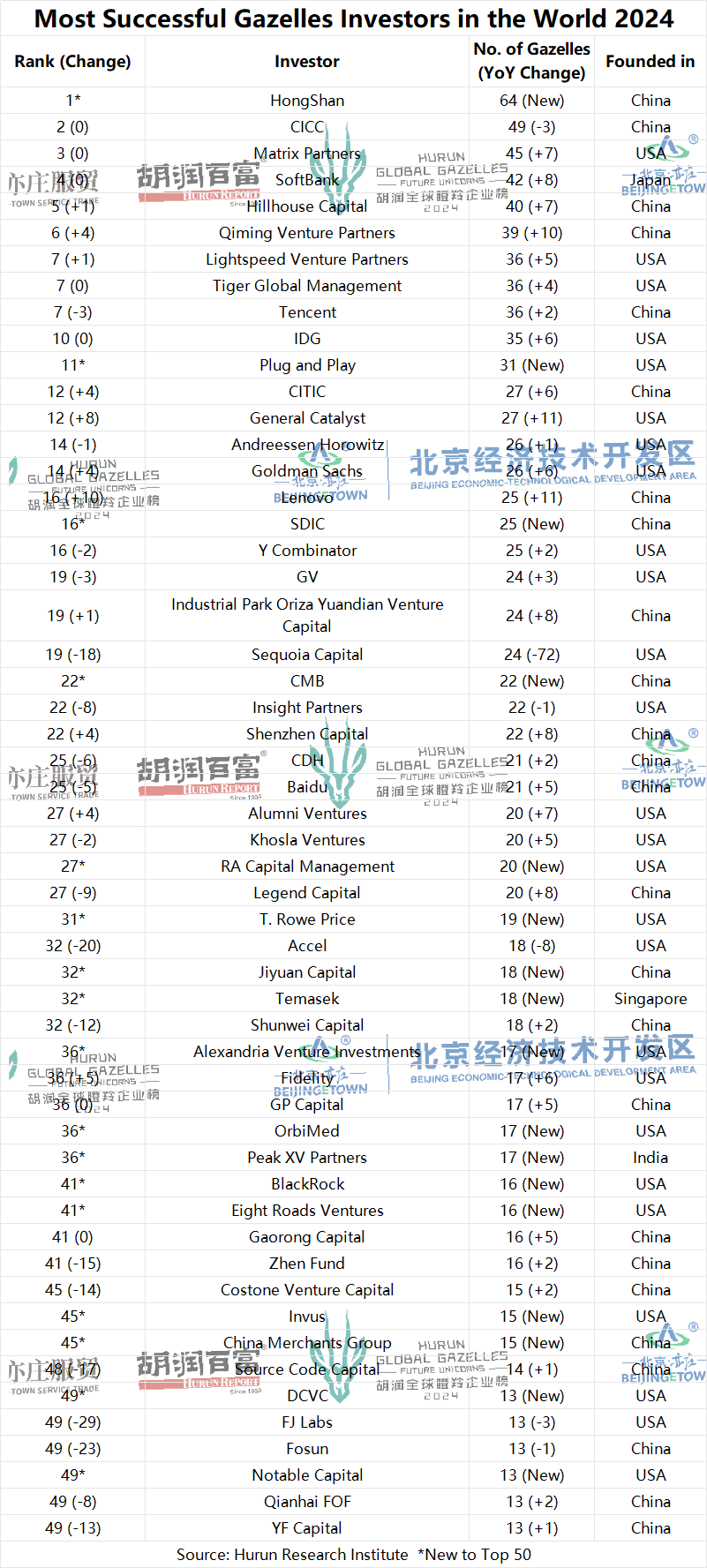
CHINA-BASED HONGSHAN WORLD'S MOST SUCCESSFUL HURUN GAZELLE INVESTOR WITH INVESTMENTS IN 64 GAZELLES, FOLLOWED BY CICC, MATRIX PARTNERS, SOFTBANK, AND HILLHOUSE CAPITAL.
AVERAGE AGE 8YRS. 27 OR 3% OF HURUN GAZELLES FOUNDED IN LAST THREE YEARS.
91 GAZELLES PROMOTED TO UNICORN OR IPO STATUS, WITH 41% COMING FROM THE US.

(8 January 2025, Beijing E-Town, China, Mumbai, India and Oxford, UK) The Hurun Research Institute today released the Hurun Future Unicorns – Global Gazelles Index 2024, a list of the world’s start-ups founded in the 2000s, not yet listed on a public exchange and most likely to ‘go unicorn’, i.e. hit a valuation of US$1bn, within three years. The cut-off date used was 31 October 2024. Hurun Research has been tracking Unicorns since 2017, Future Unicorns Gazelles since 2019 and Future Unicorns Cheetahs since 2020. This is the fourth year Hurun Research has launched the Hurun Gazelles Index on a global level.
This report includes the Most Successful Hurun Gazelles Investors 2024, a ranking of the most successful investors in the world, based on the number of Hurun Gazelles they have invested in.
Hurun Research found 803 Gazelles worldwide, up 17% from 688 last year, based in 38 countries and 204 cities. 13%, or 91, were ‘promoted’ from last year’s index, whilst 14% or 95, were ‘demoted’, no longer making the cut. 501 from last year’s index still make the cut. There were 302 new faces, led by BioTech with 77, AI 29 and HealthTech 26, and from USA 163, China 61 and the UK 17.
Of the 91 promotions, 45 went unicorn, 18 went IPO, and 28 were acquired. 37 were from the USA, 17 from China and 9 from India. The main sectors were BioTech and FinTech, with 16, followed by SaaS, with 8.
Healthcare was most impacted by Hurun Gazelles, followed by Financial Services and Business Management Solutions.
Specifically, BioTech, FinTech and SaaS led, followed by HealthTech, AI and E-commerce. 66% sell software and services, with only 34% selling physical products. 64% sell to businesses, whilst 36% are consumer-facing. On average, they were founded eight years ago, in 2016.
Hurun Report Chairman and Chief Researcher Rupert Hoogewerf said:
“The Hurun Gazelles Index is, along with the Cheetahs Index, one of two Hurun lists that identify the pipeline for the Hurun Unicorns Index. Hurun Gazelles are most likely to ‘go unicorn’ within three years, representing the most exciting startups in the world. Their animal counterpart is famous for agility and incredible bursts of speed, reaching speeds of close to 100 km/h. In much the same way, Hurun Gazelles have to run fast, or – like their animal counterparts – they may get eaten and never make it to a Hurun Unicorn.”
“The idea behind the Hurun Gazelles is to help them find more investors, strategic partners and service providers as well as encourage the founders to think bigger, grow faster and go further. I am delighted to release the Hurun Global Gazelles Index 2024 in association with Beijing E-Town, widely considered to have some of the best policies and business environment for the development of high-tech manufacturing in China.”
“Hurun Gazelles are very young, just under eight years old on average, but are already worth an average of US$700 million. We’re on the brink of the Fourth Industrial Revolution, with the rapid rise of AI transforming industries, making today, arguably, one of the best times to launch a new business. Over a quarter of Hurun Gazelles are already leveraging AI to transform sectors, with fintech, blockchain, and SaaS seeing the most disruption. The convergence of generative AI, machine learning, augmented and virtual reality, cloud computing, IoT, and automation is creating unprecedented opportunities for innovative start-ups to lead the charge in this exciting new age.”
“Healthcare is being disrupted more than any other industry. Specifically, BioTech and HealthTech represent the hottest pipeline for the next generation of unicorns, the Hurun Gazelles. Innovations in medical devices, BioTech, and digital health are transforming disease treatment, diagnostics, and patient care. China and the US are leading this healthcare revolution. Other sectors with a strong pipeline of future unicorns are Financial Services and Business Management Solutions.”
“The US leads when it comes to Hurun Gazelles, suggesting it has the strongest pipeline for future unicorns. BioTech and HealthTech are leading the way, with AI growing fastest, concentrated in San Francisco and New York, but with strong growth in Boston, Cambridge, San Diego and Palo Alto. Donald Trump winning the election is likely to have a positive impact on startups, with a focus on further deregulation and tax cuts.”
“China has more Hurun Gazelles than the rest of the world combined, except for the US, suggesting it has a very strong pipeline of unicorns. In the past five years, China has seen the number of Hurun Gazelles more than tripling from 70 to 258, with 329 new faces and 107 promotions. BioTech and Semiconductors stand out as the industries with the most number of future unicorns. By city, the ‘Big Two’ are Shanghai and Beijing, followed by Shenzhen, Hangzhou, Guangzhou and Suzhou.”
“India’s start-up ecosystem continued to shine with remarkable success stories, especially under Prime Minister Narendra Modi's leadership. The Hurun Gazelles list featured 31 promising start-ups, showcasing quality over quantity. Among the standouts, Zepto jumped to unicorn status last year, while Northern Arc Capital celebrated a significant milestone by going public. These achievements reflect India’s dynamic entrepreneurial spirit and its growing impact on the global stage. Government initiatives have played a crucial role, for example, the abolition of the 31% angel tax has alleviated financial burdens on startups, fostering innovation and growth.”
“The conflicts in Israel and Ukraine have disrupted their startup ecosystems. In Israel, companies like Wiz and Cybereason faced workforce challenges as employees joined military reserves, yet DefenseTech and AI-driven surveillance saw rapid advancements. In Ukraine, startups like Ajax Systems and DroneUA pivoted to dual-use technologies, including military drones and security systems. Despite challenges, both regions have demonstrated adaptability, driving growth in DefenseTech, AI, and cybersecurity sectors.”
“I expected to find more Hurun Gazelles in the EU, South Korea & Japan and Southeast Asia. Only 8% were from the European Union, less than 2% were from South Korea and Japan and just over 1% from Southeast Asia.”
“AI is revolutionizing industries across the globe, driving efficiency, innovation, and growth. In healthcare, AI aids in diagnostics, personalized medicine, and drug discovery. The financial sector leverages AI for fraud detection, risk management, and algorithmic trading. Retail and e-commerce benefit from AI-driven personalization, inventory optimization, and chatbots. Manufacturing adopts AI for automation, predictive maintenance, and quality control, while transportation uses it for autonomous vehicles and route optimization. In education, AI enhances learning with personalized tools, and in agriculture, it enables precision farming and crop monitoring. AI’s rapid integration into these sectors highlights its transformative role in reshaping the future of work, technology, and economies.”
“Web3, the metaverse, and robotics are driving the next frontier of technological innovation. Web3 is revolutionizing digital ownership and trust by leveraging blockchain technology to create decentralized ecosystems, enabling innovations like NFTs, smart contracts, and decentralized finance (DeFi). The metaverse is redefining how we interact, work, and play, merging virtual and augmented reality to create immersive experiences that are transforming industries like gaming, retail, and education. Meanwhile, robotics is advancing automation and precision across sectors, from manufacturing and healthcare to logistics and space exploration. Together, these technologies are laying the groundwork for a connected, efficient, and immersive future.”
“Raising money has been hard this year as interest rates have stayed high and IPOs have been relatively scarce, especially outside of the USA, resulting in a record number of acquisitions of Hurun Gazelles. On the one side, larger companies are waking up to the fact they need to consolidate their market positions and tap into new technologies. On the other side, venture capitalists, looking for returns, often push startups toward exits via acquisitions, especially if they're struggling to scale or become profitable.”
“Hurun Gazelles are expected to ‘graduate’ to Hurun Unicorns within three years, in much the same way that you are expected to graduate from a university course. You might have got into a world-famous university, but if you are still doing your undergraduate course five years later, that raises questions! Where we believe they will not make it to Unicorn status within three years, they get demoted.”
“We have identified over 3,000 Unicorns, Gazelles and Cheetahs, making Hurun the world’s largest list maker in the world for startups.”
“The reason we defined a Hurun Gazelle as a startup to ‘go unicorn’ within three years is to match the timespan usual for a late-stage investor into a scale-up. What does this mean for you? If you are an investor, you need to find the best venture capital houses to invest into these Hurun Gazelles. If you are a local government, you should try and encourage these companies to set up shop there, otherwise you risk being left behind. If you are a world leading company, you should be partnering with them, or risk being left behind. If you are thinking about which industry to work in, perhaps these companies offer strong personal development opportunities.”
“Hurun is committed to promoting entrepreneurship through its lists and research. Hurun’s ‘startup series’ has two main components, one for companies and one for individuals, making Hurun the world’s most complete list maker for start-ups in the world. At the company level, it begins with the Hurun Cheetah Index, startups most likely to go unicorn within five years, moving onto the Hurun Gazelle Index, startups most likely to go unicorn within three years, and finishing with the Hurun Unicorn Index, startups already worth US$1 billion. On the individual level, we have the Hurun Under25s, Under30s, Under35s and Under40s, for founders of businesses that are worth US$1 million, US$10 million, US$50 million and US$100 million respectively.”
As the main platform for the construction of the "Three Cities and One District" international science and technology innovation center in Beijing, Beijing E-Town has gathered rich international high-end innovation resources. This conference is also a valuable opportunity for us to showcase our innovative achievements and high-quality business environment to global technology innovation enterprises. We look forward to working together with all parties to attract more capital, talent, technology and other key innovative elements to create a better future.
Where are the World’s Gazelles based?
The world's Hurun Gazelles are now spread across 38 countries, down 1, and are located in 204 cities, a significant increase from 165 cities in the previous year. Over 150 countries still have no known Hurun Gazelle.
The USA and China led with 330 and 258 Hurun Gazelles, making up 73% of the global total. The UK was third with 45, up 3, followed by India with 31, down 17.
The UK had as many Hurun Gazelles than Germany, France, Sweden, Spain and the Netherlands combined.
By city, Shanghai overtook San Francisco to become the world’s Hurun Gazelle capital, followed by Beijing, New York and London.
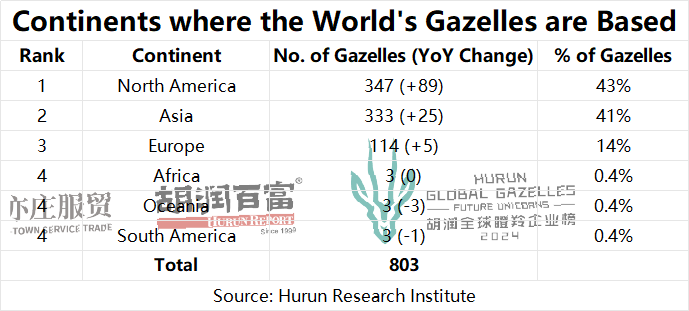
In terms of regional contributions, North America was the leading continent for creating the most Gazelles globally, followed by Asia.
By economic blocks. 62 were from the European Union, with Germany leading at 23, followed by France with 10, Sweden with 5, and Spain with 4.
10 from Southeast Asia, led by 8 in Singapore and 1 from each of Malaysia and Vietnam.
5 were from the GCC, made up of Saudi Arabia with 3, Bahrain and Kuwait 1 each.
463 or 58% were from the West, led by the USA with 330, and followed by UK 45, Germany 23, Canada 17 and France 10.
303 from Global South, led by China with 258 and India with 31.
Table 1: Top 20 Countries and Cities where the World’s Gazelles are Based
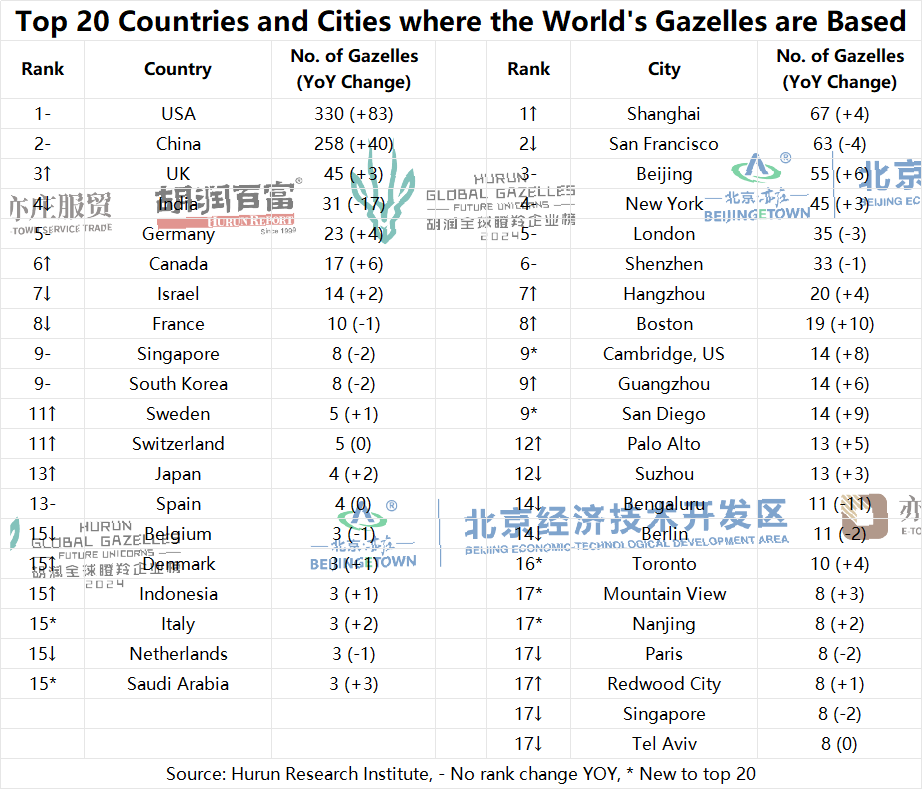
Table 2: Top Cities for Gazelles in the USA, China & Rest of the World
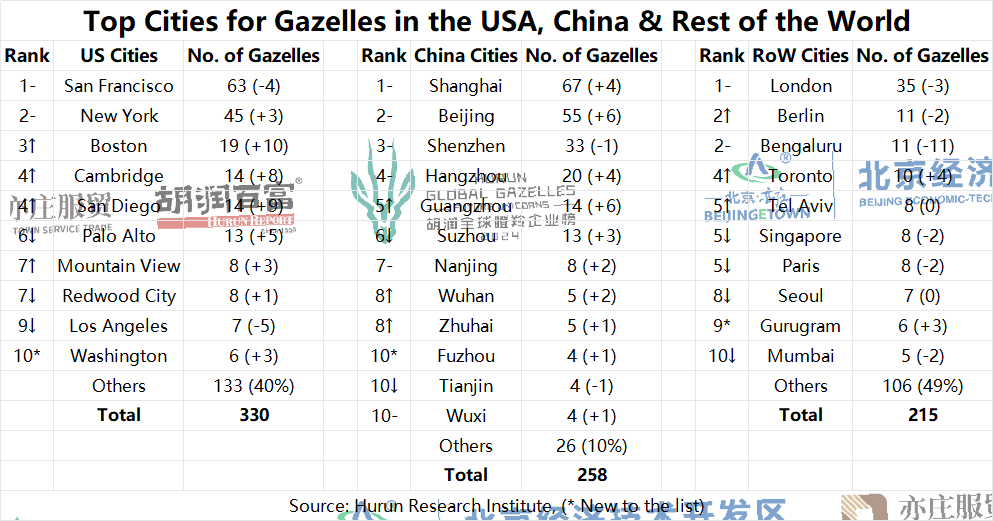
Table 3: Continents where the World’s Gazelles are Based
What Industries Do They Come From?
The fastest-growing sectors of the year were BioTech, Media & Entertainment, AI and Consumer Goods, suggesting this is where the next unicorns are coming from.
Overall, the top sectors were BioTech, FinTech and SaaS.
The key sectors for Hurun Gazelles in the US were BioTech and HealthTech. In China, it was BioTech and Semiconductors, while for the Rest of the World it was FinTech and E-commerce.
Notably, 66% focused on selling software and services, with FinTech, SaaS, BioTech, and AI being the main drivers. 34% sell physical products.
64% operate in the B2B space, 36% target consumers.
Healthcare was most impacted by Hurun Gazelles, followed by Financial Services and Business Management Solutions.
UK-based Pragmatic Semiconductor is revolutionizing the semiconductor industry by developing low-cost, flexible chips tailored for IoT, wearables, and quantum applications, pushing the boundaries of traditional manufacturing processes, While India-based Agnikul is revolutionizing space exploration with its modular small rockets, it makes satellite launches more accessible and cost-efficient for businesses worldwide.
Sunfire, based in Germany, is producing green hydrogen through electrolysis, facilitating the transition of heavy industries to clean, sustainable energy. Meanwhile, Bright Machines, headquartered in the USA, is transforming manufacturing with robotics and software-driven automation for smarter, scalable production.
Table 4: Top 10 Industries of Hurun Gazelles
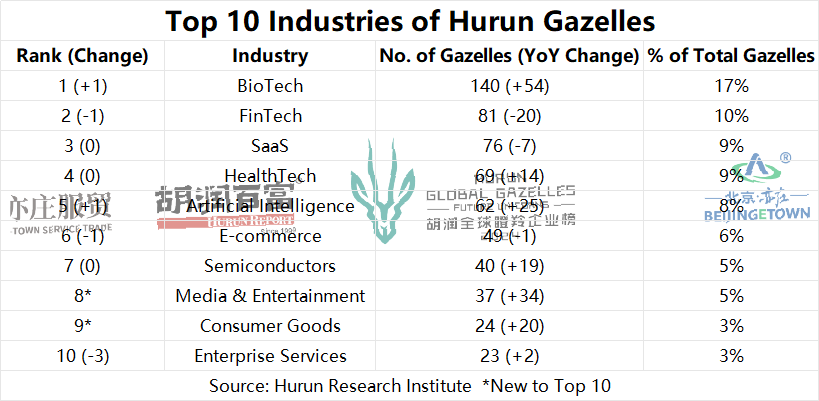
Table 5: Key sectors of Hurun Gazelles in US, China and Rest of World
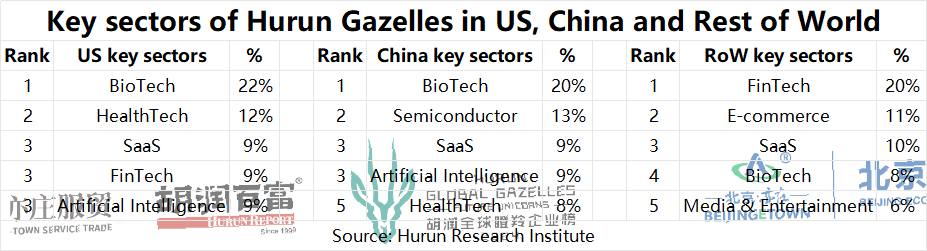
Table 6: High-profile Hurun Gazelles by Region
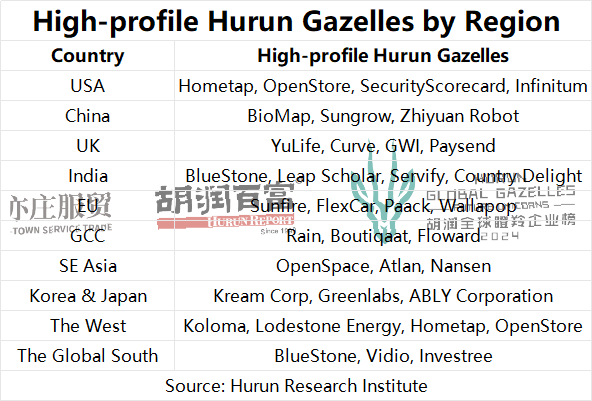
Table 7: Top 10 Industries most disrupted by Hurun Gazelles
Promotions and Demotions
Overall, 13% of last year’s list was promoted and 14% demoted.
91 were promoted from last year’s Hurun Gazelles, with 45 ‘going unicorn’, 18 going IPO and 28 acquired. Of the 91 promoted gazelles, 37 were from the US, 17 China, and 9 from India. The main sectors of promoted gazelles were BioTech and FinTech, with 16, followed by SaaS, with eight.
From last year’s Hurun Gazelles, Yubico, a San Francisco-based cybersecurity company, emerged as the most valuable IPO, with a market capitalisation of US$2.2bn. Shiftup, a South Korean video game developer and publisher known for titles like Stellar Blade, reached a valuation of US$2.1bn, reflecting its growing prominence in the gaming industry.
45 Hurun Gazelles were promoted to the Hurun Global Unicorns Index 2024, led by Berlin-based AI defense and security platform Helsing, Mumbai-based quick commerce platform Zepto, and San Francisco-based Neuralink, specializing in brain-machine interface technology. All three are valued at around US$5bn.
AI21 Labs leapt from gazelle to unicorn status in record time, redefining speed and innovation in the AI space. With cutting-edge solutions, it's not just growing—it’s sprinting to reshape the future of artificial intelligence.
14% or 95 Hurun Gazelles from last year were dropped from the list, no longer likely to make it to unicorn status within three years. Of these, 4 were from China, 43 from the USA, and 19 from India. The leading sectors of demoted Gazelles were FinTech (22) and E-Commerce (15), followed closely by SaaS with 10.
Table 8: Top 10 – Hurun Gazelles ‘promoted’ to unicorn status
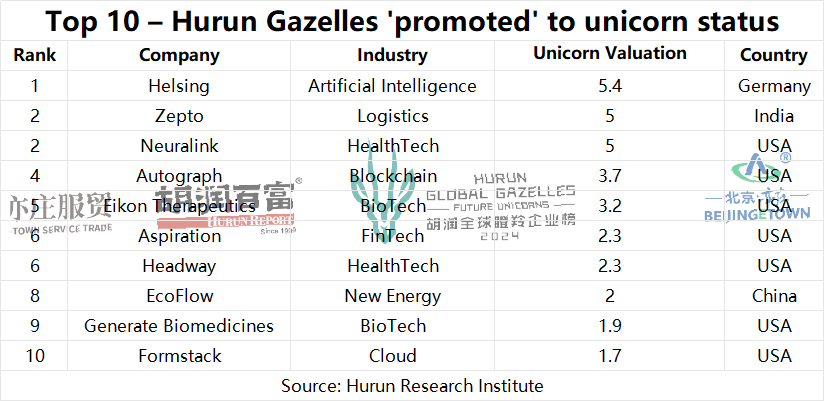
Table 9: Top 10 Hurun Gazelles from last year that went IPO
Which Investors Are The Best At Finding Gazelles?
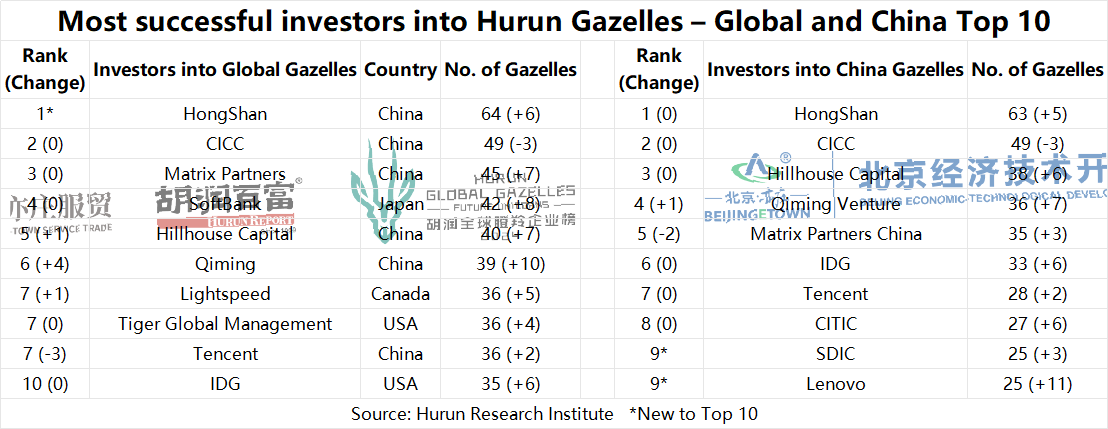
HongShan was the world’s most successful investor into Hurun Gazelles, followed by CICC, Matrix Partners, SoftBank, and Hillhouse Capital.
UK-based Eight Roads Ventures was the top investor in UK-based Hurun Gazelles, with 16. In India, Peak XV Partners led with 17 investments.
For the full Top 50 list of the Most Successful Hurun Gazelles Investors in the World 2024, see Appendix.
Table 10: Most successful investors into Hurun Gazelles – Global and China Top 10
Comparison between Hurun Gazelles, Hurun Unicorns and Hurun Global 500
A Unicorn is a start-up founded in the 2000s, worth at least a billion dollars, and not yet listed on a public exchange. The Hurun Global 500 lists the 500 most valuable non-state-controlled businesses in the world.
The Hurun Global 500 pipeline is the Hurun Global Unicorn Index. The pipeline for unicorns is the Hurun Future Unicorns: Global Gazelles Index.
China has a much higher percentage of unicorns than Hurun Global 500 companies, suggesting it will go on to produce more Hurun Global 500 over the next five years. In contrast, places like the EU, Japan, Germany and Switzerland, have a smaller percentage of unicorns than Global 500 companies, suggesting they will see a decline in their share of the Global 500. The US, which dominates with nearly half of the world’s unicorns and Global 500 companies, will likely maintain its leadership position in the coming years.
Healthcare and Business Management Solutions are the new kids on the block, while Energy can expect to see fewer companies on the Hurun Global 500.
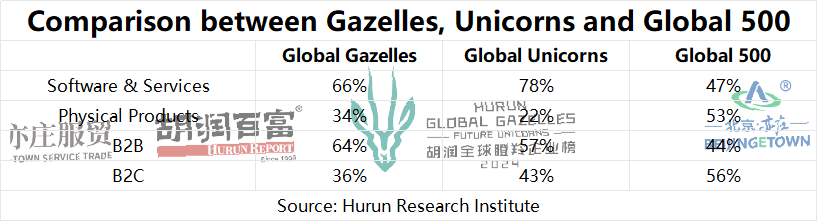
Additionally, businesses focusing on selling software and services directly to other companies (B2B) are rising, outpacing those targeting consumers.
Table 11A: By Country comparison of Hurun Gazelles, Hurun Unicorns and Hurun Global 500s

Table 11B: By Industry comparison of Hurun Gazelles, Hurun Unicorns and Hurun Global 500s
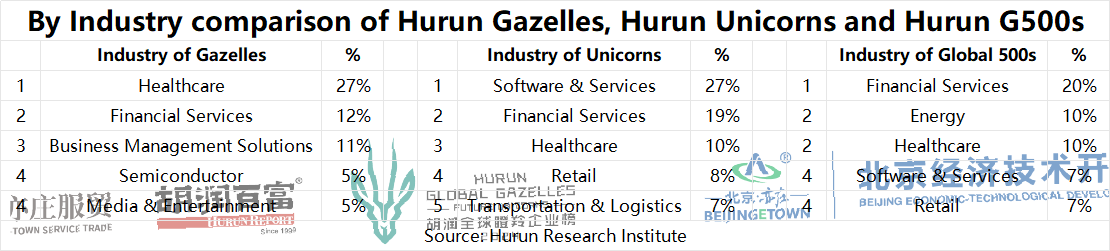
Table 11C: Comparison between Gazelles, Unicorns and Global 500
Key Statistics
Since the first Hurun Global Gazelles list in 2021, the number of Hurun Gazelles has grown from 525 to 803, up 278 or 53%. In this period, 211 were promoted, of which 134 went unicorn, 38 went IPO and 39 have been acquired. 133 were demoted.
USA. 163 of the 302 new faces this year were from the US. 37 were promoted from last year, with 3 going public through an IPO, 19 reaching unicorn status, and 15 being acquired. 43 companies from the US were demoted.
China. Since 2019, China has seen the number of Hurun Gazelles more than tripling from 70 to 258. In these five years, there have been 329 new faces, 107 promotions, of which 63 went unicorn, 43 went IPO and 1 was acquired. 34 were demoted.
India. The Hurun Global Gazelles list in 2024 features 11 new faces from India. Over the course of the year, 9 companies were promoted, with 1 going public through an IPO, 7 reaching unicorn status, and 1 being acquired. 19 companies from the India were demoted. The top India promotions to Hurun Unicorns was logistics platform Zepto, which today has a valuation of US$5bn. FinTech platform Northern Arc went IPO in the last year and has a market cap of US$660mn.
Table 12: Key Statistics for Hurun Future Unicorns: Global Gazelles
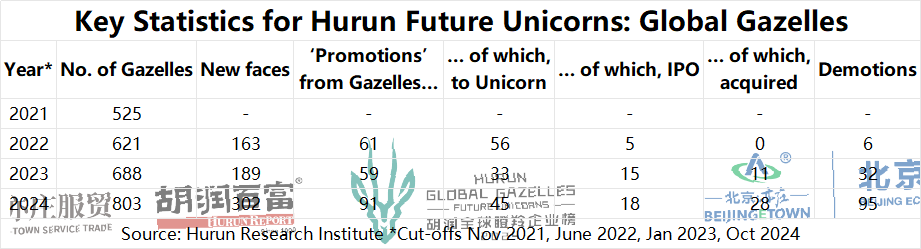
Table 13: Key Statistics for Hurun Future Unicorns: China Gazelles
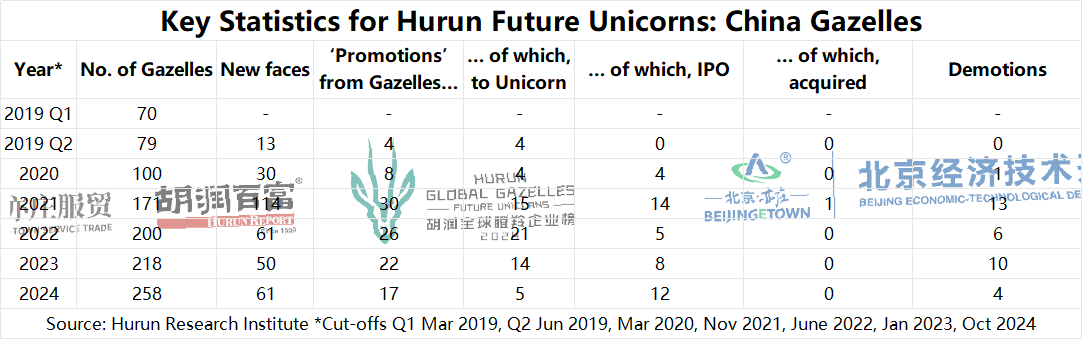
Table 14: Top 10 China Promotions from Gazelle to Unicorn since 2019

Table 15: Top 10 China Promotions from Gazelle to Listed company since 2019
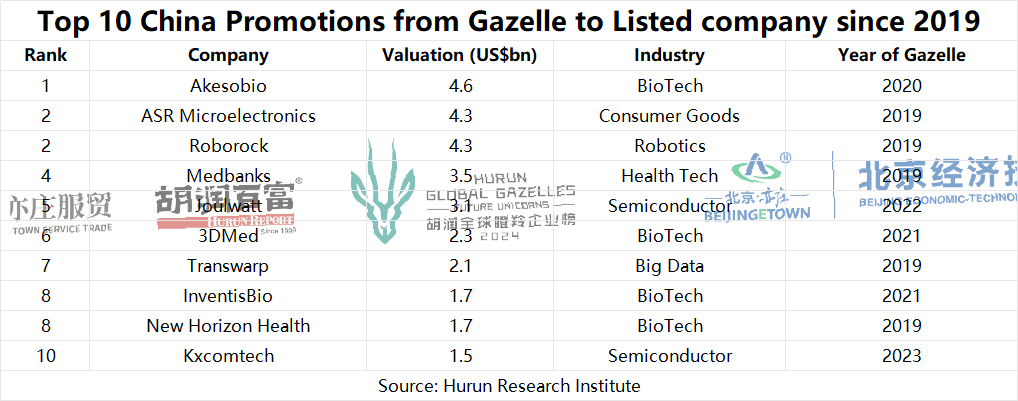
Table 16: Key Statistics for Hurun Future Unicorns: India Gazelles
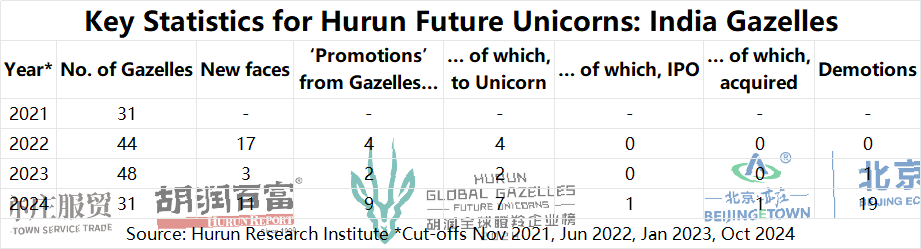
Table 17: Top 10 India Promotions from Gazelle to Unicorn
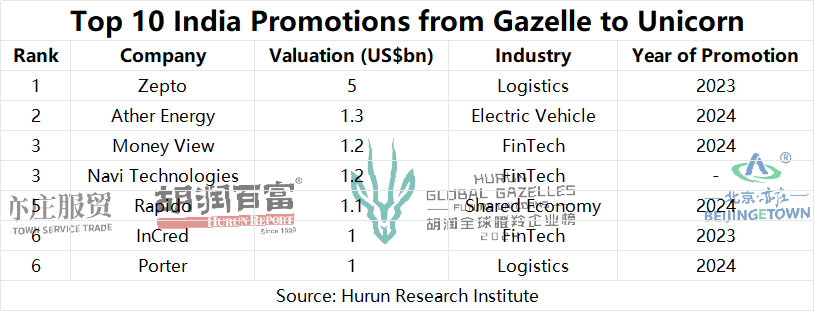
Table 18: Key Statistics for UK Gazelles

Methodology
The Hurun Future Unicorns – Global Gazelles Index 2024 was compiled by the Hurun Research Institute. The cut-off used was 31 October 2024. Hurun Research defines a Gazelle as a start-up founded in the 2000s, not yet listed on a public exchange, and most likely, in our opinion to reach a valuation of US$1 billion – i.e. ‘go unicorn’ – in the next three years. Hurun Gazelles have an average valuation of US$700 million and are mostly growing at an annual rate of about 20%.
Many of the world’s top investment houses provided details of their portfolio, which Hurun Research cross-checked against specialised investment databases, industry experts, media sources, and Hurun Gazelle co-founders.
Valuing Hurun Gazelles can be tricky. The very nature of these super-fast-growing companies makes valuations hard to pin down. Still, to ensure consistency of the valuations, the Hurun research team used the most recent valuation based on a sizeable round. It becomes harder when a Hurun Gazelle is underperforming or on its way down since it is unlikely to have a new round of investment at a valuation lower than the previous round. In this case, Hurun used industry comparatives to ascertain a new lower valuation.
Countries and cities are ranked according to the Hurun Gazelle head office.
Gazelles leave the Hurun Global Gazelles Index either by being ‘promoted’ or ‘demoted’. Promotions are achieved by becoming a Unicorn, listing on a public exchange (IPO), or being acquired. Demotions are when Hurun Research believes they will no longer become a unicorn within three years.
Hurun Research has been tracking Unicorns since 2017, Gazelles since 2019 and Cheetahs since 2020.
Disclaimer. All the data collection and the research has been carried out by Hurun Research. This report is meant for information purposes only. Reasonable care and caution have been taken in preparing this report. The information contained in this report has been obtained from sources that are considered reliable. By accessing and/or using any part of the report, the user accepts this disclaimer and exclusion of liability which operates to the benefit of Hurun. Hurun does not guarantee the accuracy, adequacy or completeness of any information contained in the report and neither shall it be responsible for any errors or omissions in or for the results obtained from the use of such information. No third party whose information is referenced in this report under the credit to it, assumes any liability towards the user with respect to its information. Hurun shall not be liable for any decisions made by the user based on this report (including those of investment or divestiture) and the user takes full responsibility for their decisions made based on this report. Hurun shall not be liable to any user of this report (and expressly disclaim liability) for any loss, damage of any nature, including but not limited to direct, indirect, punitive, special, exemplary, consequential losses, loss of profit, lost business and economic loss regardless of the cause or form of action and regardless of whether or not any such loss could have been foreseen.
Hurun Future Unicorns in the World – Global Gazelles Index 2024
Country | Headquarters | Company | Founders | Main Sector |
Australia | Sydney | Dovetail | Benjamin Humphrey, Bradley Ayers, Nick Frandsen | Cloud |
Australia | Sydney | Saluda Medical | John Parker | HealthTech |
Austria | Vienna | Adverity | Alexander Igelsböck, Andreas Glänzer, Martin Brunthaler | Cloud |
Bahrain | Manama | Rain | Abdullah Almoaiqel, AJ Nelson | Blockchain |
Belgium | Ghent | AgomAb Therapeutics | Federica Linty, Hans De Haard, Manuela Cazzanti, Michael Saunders, Virginia Morello | Biotech |
Belgium | Zele | Drylock Technologies | Bart Van Malderen | Consumer Goods |
Belgium | Brussels | Tree Energy Solutions | Paul van Poecke, Marcel van Poecke | New Energy |
Brazil | Barueri | Celcoin | Marcelo Franca Correa | FinTech |
Brazil | Sao Paulo | Stark Bank | Rafael Stark | FinTech |
Canada | Vancouver | Abdera Therapeutics | Adam Judge, Lana Janes, Michael Abrahams | Biotech |
Canada | Toronto | Ataccama | Jan Cervinka, Jan Mrazek, Michal Klaus, Petr Jech | SaaS |
Canada | Vancouver | Borealis Biosciences | - | Biotech |
Canada | Calgary | Eavor Technologies | John Redfern, Paul Cairns | CleanTech |
Canada | Burnaby | General Fusion | Michel Laberge | New Energy |
Canada | Vancouver | Kardium | Doug Goertzen, Dan Gelbart, Sam Lichtenstein, and Amos Michelson | HealthTech |
Canada | Toronto | KOHO Financial | Daniel Eberhard, Jonathan Bixby, Mike Benna | FinTech |
Canada | Toronto | League | Michael Serbinis | HealthTech |
Canada | Toronto | Ledn | Adam Reeds, Mauricio Di Bartolomeo | FinTech |
Canada | Toronto | Reunion Neuroscience | Mujeeb Jafferi, Ryan Yermus | Biotech |
Canada | Ontario | Tailscale | Avery Pennarun, Brad Fitzpatrick, David Carney | Cyber Security |
Canada | Toronto | TouchBistro | Alex Barrotti, Geordie Konrad | SaaS |
Canada | Toronto | Vena Solutions | Don Mal, George Papayiannis, Rishi Grover | SaaS |
Canada | Montréal | Vention | Etienne Lacroix, Max Windisch | Robotics |
Canada | Toronto | Viral Nation | Joe Gagliese, Mathew Micheli | Media & Entertainment |
Canada | Toronto | Waabi | Raquel Urtasun | Logistics |
China | Beijing | 52Toys | Chen Wei | Media & Entertainment |
China | Beijing | AccuMedical | Lyu Yiran | HealthTech |
China | Suzhou | Advaccine | Wang Bing | Biotech |
China | Zhuhai | AkroStar | Zeng Keqiang | Semiconductor |
China | Shenzhen | Allystar | Sun Zhongliang | Semiconductor |
China | Suzhou | Alpha Biopharma | Liu Zhonghai | Biotech |
China | Shenzhen | Ambilight | Wang Chao | New Materials |
China | Shenzhen | ArchForce | Zou Sheng | FinTech |
China | Shanghai | Arctic Vision | Hu Haidi | Biotech |
China | Shanghai | ArkBio | Wu Zheng | Biotech |
China | Guangzhou | Asensing | Li Rongxi | Automobile & Auto Components |
China | Nanjing | AutoCore | Zhang Yang | Artificial Intelligence |
China | Shenzhen | AutoX | Xiao Jianxiong | Artificial Intelligence |
China | Beijing | Avistone | Shi Hepeng | Biotech |
China | Shanghai | Axera | Qiu Xiaoxin | Semiconductor |
China | Wuxi | B.H.MED | Huang Yong | HealthTech |
China | Meishan | Bamboo | Shen Genlian | Consumer Goods |
China | Hangzhou | Bang-er Orthopedic | Cheng Dong | HealthTech |
China | Hangzhou | Bangsun Technology | Wang Xinyu | Big Data |
China | Fuzhou | Berry Oncology | Zhou Qun | Biotech |
China | Beijing | BioMap | Liu Wei | Biotech |
China | Tianjin | Bioscience | Ruan Dawei | Biotech |
China | Zhuhai | Biotheus | Liu Xiaolin | Biotech |
China | Guangzhou | Black Unique | She Xiwei | E-commerce |
China | Beijing | Bluepha | Li Teng, Zhang Haoqian | Biotech |
China | Hangzhou | Booming Tech | Wang Xi | Media & Entertainment |
China | Nanjing | Bouffalo Lab | Song Yonghua | Semiconductor |
China | Quzhou | Carbon one | Yue Min | New Energy |
China | Shenzhen | CassTime | Jiang Yongxing | E-commerce |
China | Shanghai | CBMG | Liu Bizuo | Biotech |
China | Suzhou | CF PharmTech | Liang Wenqing, Li Li | Biotech |
China | Suzhou | CH Biomedical | Chen Chen | HealthTech |
China | Beijing | Changmugu | Zhang Yiling | Artificial Intelligence |
China | Beijing | Changyang Technology | Jiang Haikun, Fan Yu | Enterprise Services |
China | Wuhan | Chime Biologics | Huang Ruijin | Biotech |
China | Beijing | China National Energy | Chen Haisheng | New Energy |
China | Shanghai | CiX | Sun Wenjian | Semiconductor |
China | Tianjin | ClinChoice | Zhen Ling, Ke Xin, Zhang Dan, John D.Balian | Biotech |
China | Nanjing | Cloud Account Network Technology | Xue Xinghua | Saas |
China | Guangzhou | Cloudbreak Therapeutics | Ni Jingsong | Biotech |
China | Shenzhen | Cornerstone Robotics | Ou Guowei | Robotics |
China | Guangzhou | Creative Biosciences | Zou Hongzhi | Biotech |
China | Shanghai | Cyclone | Gao Yuguang, Cheng Wenyuan | Robotics |
China | Shanghai | Cygnus Semi | Xia Lusheng | Semiconductor |
China | Shanghai | Cytek Biosciences | Jiang Wenbin | Biotech |
China | Hangzhou | Dahiti | Wang Lingbo, Jin Jie | E-commerce |
China | Shenzhen | Dashu | Liu Bo | FinTech |
China | Shanghai | Data Grand | Chen Yunwen | Big Data |
China | Wuhan | DCG | Liu Yongjian | Media & Entertainment |
China | Beijing | Deepexi | Zhao Jiehui, Yang Lei | Artificial Intelligence |
China | Tianjin | Deepinfar | Wei Jiancang | Robotics |
China | Hefei | Deepway | Wan Jun | Artificial Intelligence |
China | Beijing | DERA | Zhang Jiantao | Semiconductor |
China | Hangzhou | Desman | Zhu Zhiling | Consumer Goods |
China | Hangzhou | DIAN | Tang Yongbo | Shared Economy |
China | Shenzhen | Dianxiaomi | Du Jianying | Saas |
China | Wuxi | DIS Microelectronics | Ma Weiqing | Semiconductor |
China | Shenzhen | Distinct Healthcare | Wang Zhiyuan | HealthTech |
China | Guangzhou | DMAI | Zhu Songchun | Artificial Intelligence |
China | Shenzhen | Dobot | Liu Peichao | Robotics |
China | Suzhou | DoGain | Zhao Weidong | Semiconductor |
China | Beijing | Double FS | Zhang Xiaopei | E-commerce |
China | Beijing | DP Tech | Sun Weijie , Zhang Linfeng | Artificial Intelligence |
China | Shenzhen | DST | Zhang Haiying | Logistics |
China | Shanghai | Eigencomm | Liu Shi | Semiconductor |
China | Shanghai | Elpiscience | Ji Xiaohui, Lu Hongtao | Biotech |
China | Shanghai | EpimAb Biotherapeutics | Wu Chenbing | Biotech |
China | Shenzhen | Fadada | Huang Xiang, Lin Kaihui | Saas |
China | Beijing | Fenbeitong | Lan Xi | Saas |
China | Shenzhen | Ffalcon | Wang Cheng, Li Hongwei | Artificial Intelligence |
China | Jiaxing | Freetech | Zhang Lin | Artificial Intelligence |
China | Shanghai | FTXT | Wei Jianjun | New Energy |
China | Suzhou | GaiaWorks | Zhang Xinbo,Wei Yugang, Zhang Rongbing | Saas |
China | Wuxi | Genecast | Du Bo | Biotech |
China | Shenzhen | GeneMind Biosciences | Yan Qin | Biotech |
China | Shanghai | Genesat | Chen Feili | Aerospace |
China | Shanghai | GenFleet Therapeutics | Lyu Qiang, Lan Jiong | Biotech |
China | Shanghai | Geometrical-PAL | Xue Dan | Artificial Intelligence |
China | Wuxi | GMC | Pang Jinming | Semiconductor |
China | Beijing | Gnen+ | Yi Xin, Yang Ling | Biotech |
China | Shanghai | Going-link | Wang Pei | Saas |
China | Shenzhen | Golden | Gao Xia, Zhang Minxia | Saas |
China | Hangzhou | Good Me | Wang Yun'an | Food & Beverages |
China | Ningbo | GravityXR™ | Wang Chaohao | Semiconductor |
China | Shanghai | Guan An | Hu Shaoyong | Big Data |
China | Chongqing | Haier Money | Tan Lixia | FinTech |
China | Shanghai | Haihe Biopharma | Ding Jian | Biotech |
China | Jiaxing | Hanshow | Hou Shiguo | Enterprise Services |
China | Shanghai | Hanyu Medical | Dai Yufeng | HealthTech |
China | Dongguan | Haylou | Ma Hao | Consumer Goods |
China | Shanghai | HestiaPower | Xu Fei | Semiconductor |
China | Zhuhai | Hexaflake | Qiu Xiaogang | Semiconductor |
China | Hangzhou | Hipac | Zhao Chen | E-commerce |
China | Fuzhou | Hitronics | Ling Jiwu | Consumer Goods |
China | Beijing | Holomatic | Ni Kai | Artificial Intelligence |
China | Hangzhou | Hongjing Drive | Liu Feilong | Artificial Intelligence |
China | Beijing | Hose | Ma Chunquan, Yu Deming, Fang Zhaoxue | Saas |
China | Nanjing | Houmo AI | Wu Qiang | Semiconductor |
China | Beijing | Hua Kong Tsingjiao | Zhang Xudong | Big Data |
China | Beijing | Huisuanzhang | Zhang Shugang | Saas |
China | Beijing | Hygea Medical | Hang Qianfu | HealthTech |
China | Wuhan | Hzymes | Yang Guangyu | Biotech |
China | Nanjing | Iaso Bio | Zhang Jinhua | Biotech |
China | Beijing | IBE | Qu Kaifeng | Saas |
China | Shanghai | Ice Kredit | Gu Linyun | FinTech |
China | Shanghai | Ideal Energy Sunflower | Sun Xidong | Semiconductor |
China | Shanghai | Iluvatar CoreX | Li Yunpeng, Zheng Jinshan | Semiconductor |
China | Beijing | IngageApp | Shi Yanze, Dengxiang | Saas |
China | Hangzhou | Innoforce | Yu Guoliang | Biotech |
China | Shanghai | InnoGrit | Wu Zining | Semiconductor |
China | Shenzhen | Insight Lifetech | Song Liang | HealthTech |
China | Hong Kong | Insilico Medicine | Alex Zhavoronkov | Artificial Intelligence |
China | Shanghai | Inventchip | Zhang Yongxi | Semiconductor |
China | Shanghai | Jade Bird Display | Li Qiming | Semiconductor |
China | Shanghai | JAKA | Li Mingyang | Robotics |
China | Xi'an | JD Energy | Liu Weizeng | New Energy |
China | Hangzhou | Jianjia Medical | Xu Jing | HealthTech |
China | Hangzhou | JinLingYang Consulting Limited | Cai Hongliang | Food & Beverages |
China | Shanghai | JLSemi | He Runsheng | Semiconductor |
China | Nanjing | JSSI Semi | Zhang Guodong | Semiconductor |
China | Shanghai | Jumeng | Huang Yuhua | Logistics |
China | Shanghai | Jushuitan Network Technology | Luo Haidong | Saas |
China | Hangzhou | Jyss Bio | Xu Jiangyun | Biotech |
China | Shenzhen | Kaadas | Su Zhiyong | Consumer Goods |
China | Changzhou | KATOP | Chen Wei | New Energy |
China | Beijing | Keya Medical | Zhou Yahui | HealthTech |
China | Huzhou | Khat | Guo Chuan | Automobile & Auto Components |
China | Beijing | Laiye | Wang Guanchun | Robotics |
China | Shanghai | Leadrive | Shen Jie | Semiconductor |
China | Shanghai | Lightelligence | Shen Yichen, Meng Huaiyu, Spencer Powers, Marin Soljacic | Semiconductor |
China | Shenzhen | Lingxing | Fu Bo | Saas |
China | Beijing | Loock | Chen Bin, Gan Tao, Zhang Dongsheng | Consumer Goods |
China | Shanghai | M Stand | Ge Dong | Food & Beverages |
China | Beijing | Mech-Mind | Shao Tianlan, Ding Youshuang, Fuao | Robotics |
China | Xiamen | Meet you | Chen Fangyi | Saas |
China | Beijing | Meican | Zhao Xiao, Xu Yang | E-commerce |
China | Beijing | Mewe | Ma Dong | Media & Entertainment |
China | Guangzhou | MingMed | Huang Mingguo, Zhang Yan | Biotech |
China | Shenzhen | Minieye | Liu Guoqing | Artificial Intelligence |
China | Beijing | Mino Space | Gao Enyu | Aerospace |
China | Changsha | Miracle Miles | Lin Yang | Consumer Goods |
China | Shanghai | MitrAssist | Wang Li, Zhong Wei | HealthTech |
China | Beijing | Moka | Li Guoxing | Saas |
China | Beijing | Mushroom | Zhu Lei | Artificial Intelligence |
China | Hangzhou | Myweimai | Qiu Jialin | HealthTech |
China | Beijing | Naxions | Ruan Wei | Enterprise Services |
China | Shanghai | NEIWAI | Liu Xiaolu | Consumer Goods |
China | Jinan | Netint | Nie Renke | Semiconductor |
China | Beijing | Neural Galaxy | Wei Kecheng, Liu Hesheng, Robert Desimone, Feng Guoping | HealthTech |
China | Wuhan | Neurophth | Li Bin | Biotech |
China | Shanghai | Newmed | Yu Qifeng, Qintao | HealthTech |
China | Shanghai | Newsoara | Li Yuannian | Biotech |
China | Beijing | Nextdata | Tang Huijun, Liu Shuanlin, Liang Kun | Artificial Intelligence |
China | Shenzhen | Xreal | Xu Chi | Artificial Intelligence |
China | Shanghai | Nuance Biotech | Mark Lotter | Biotech |
China | Hangzhou | Nurotron | Li Fangping | HealthTech |
China | Shanghai | Oncologie | Laura Elaine Benjamin | Biotech |
China | Chongqing | One Space | Shuchang | Aerospace |
China | Yantai | Orien Space | Bu Xiangwei , Peng Haomin , Yao Song , Wei Kai | Aerospace |
China | Shenzhen | Orvibo | Wang Xionghui | Consumer Goods |
Canada | Toronto | Parallel | Han C | Media & Entertainment |
China | Shenzhen | Parametrix.ai | Liu Yongsheng | Artificial Intelligence |
China | Beijing | PCTEAM | Tang Xiuguo | Enterprise Services |
China | Shanghai | Pear Video | Qiu Bing | Media & Entertainment |
China | Suzhou | Peg BIO | Xu Min | Biotech |
China | Beijing | Percent | Su Meng, Bai Linsen | Big Data |
China | Beijing | Percutek | Zhou Jian | HealthTech |
China | Shanghai | Petkit | Guo Weixue, Yang Daili, Guo Weike | E-commerce |
China | Shanghai | Pharmalegacy | Duan Jifeng | HealthTech |
China | Xi'an | Proton Automotive | Wang Zhao | Automobile & Auto Components |
China | Hangzhou | PTM Bio | Cheng Zhongyi | Biotech |
China | Beijing | Qcraft | Yu Qian | Artificial Intelligence |
China | Shanghai | Qingting | Zhang Qiang | Media & Entertainment |
China | Chengdu | Qitan Tech | Hu Geng, Xie Dan, Bai Jingwei, Wang Jin | Biotech |
China | Guangzhou | Raynovent | You Chaofeng , Chen Xiaoxin | Biotech |
China | Shenzhen | Robosen | Chen Xiaosen | Robotics |
China | Beijing | ROKAE | Tuo Hua | Robotics |
China | Suzhou | Ruibo Biological Technology | Liang Zicai | Biotech |
China | Beijing | SAFE Pharmaceutical | Liu Yang | Biotech |
China | Changsha | SaturnBird | Wu Jun | Food & Beverages |
China | Suzhou | SceneRay | Ning Yihua | HealthTech |
China | Hangzhou | Sciwind | Pan Hai | HealthTech |
China | Hefei | SeeYA Technology | Tieer Gu | Consumer Goods |
China | Shanghai | Semiment | Song Honggang | Semiconductor |
China | Shanghai | Semi-Tech | Li Gangjiang | Saas |
China | Nanjing | Senasic | Li Mengxiong | Semiconductor |
China | Suzhou | Sepax | Huang Xueying | Biotech |
China | Shanghai | Shanghai Cell Therapy Group | Qian Qijun | Biotech |
China | Guangzhou | Shin Group | Yao Kejian | Semiconductor |
China | Shenzhen | Shoplazza | Li Junfeng, Xia Bin | Saas |
China | Shanghai | Shuhe | Xu Zhigang | FinTech |
China | Guangzhou | Simpcare | Liu Shichao | Consumer Goods |
China | Shanghai | Singlera Genomics | Gao Yuan, Zhang Kun, Zhang Jiangli, Liu Qiang, Liu Rui | Biotech |
China | Guangzhou | SinoHyKey | Ye Siyu | New Energy |
China | Beijing | SinoTau | Xu Xinsheng | Biotech |
China | Suzhou | Sinovent | Qiang Jing | Biotech |
China | Beijing | Sixents | Chen Peng | Artificial Intelligence |
China | Shenzhen | Smart Fabric | Fu Junchao | Saas |
China | Beijing | Sobot | Xu Yi, Peng Wei, Long Zhongwu, Wu Linan | Enterprise Services |
China | Beijing | Space Transportation | Wang Yudong | Aerospace |
China | Shenzhen | Starfield | Wu Yanzi | Food & Beverages |
China | Shenzhen | Starlink | Liu Xin | E-commerce |
China | Hangzhou | Style3D | Liu Bin | Enterprise Services |
China | Hefei | Sungrow | Peng Chaocai | New Energy |
China | Guangzhou | Sunvega | Cai Zhisen | Enterprise Services |
China | Shenzhen | Super Monkey | Ma Yue | Media & Entertainment |
China | Shanghai | Sweetome | Luo Jun | Shared Economy |
China | Shanghai | SYNYI.AI | Zhang Shaodian | Artificial Intelligence |
China | Beijing | Tage Idriver | Yu Guizhen | Robotics |
China | Hangzhou | Tasogare | Lin Hao | Food & Beverages |
China | Shanghai | Techstorm | Ji Gang | New Materials |
China | Beijing | TenaFe | Li Mengkun | Semiconductor |
China | Hangzhou | Terminus | Zhao Fengwei | Saas |
China | Wuhan | Thinktrans | Zhao Yong | Semiconductor |
China | Beijing | ThreatBook | Xue Feng | Enterprise Services |
China | Fuzhou | Tongbo | Li Xianyang | New Materials |
China | Shanghai | Tongyu Automotive | Shu Qiang | Artificial Intelligence |
China | Shanghai | Tophant | Xie Chen | Big Data |
China | Quzhou | TopOleFin | Wang Guo | New Materials |
China | Nanjing | TransThera | Wu Yongqian | Biotech |
China | Zhuhai | Trinomab | Liao Huaxin | Biotech |
China | Tianjin | Tripmod | Zhou Rong | E-commerce |
China | Guangzhou | TT | Song Ke | Media & Entertainment |
China | Shanghai | Ttpai | Wang Weiwei | Saas |
China | Beijing | Union Tech | Wang Jiping | Saas |
China | Shanghai | Urtekram | Liu Xiaokun | Consumer Goods |
China | Shenzhen | Virogin Biotech | Huang Hongwei, Jia Weiguo, Zhao Ronghua | Biotech |
China | Zhuhai | Visicont Medicine | Li Xiaowei | HealthTech |
China | Shenzhen | Visionnav | Liu Yunhui | Robotics |
China | Beijing | Wenge | Wang Lei, Luo Ying, Zeng Dajun | Big Data |
China | Shanghai | Worg | Xu Aiwu | Biotech |
China | Guangzhou | Wow Colour | Chen Chunyan | Consumer Goods |
China | Liuzhou | Wuling Nev | Yuan Zhijun | Automobile & Auto Components |
China | Shanghai | Wuxidiagnostics | Li Ge | Biotech |
China | Xuzhou | Xcmg Hanyun | Lu Chuan | Enterprise Services |
China | Shanghai | Xihua Scientific | Xing Jinsong | Biotech |
China | Beijing | XinAi Soprts | Yu Linxiao | Media & Entertainment |
China | Suzhou | Xinxin Hangtu | Li Jun | Semiconductor |
China | Shanghai | Xinyi | Xiao Jianhong | Semiconductor |
China | Beijing | XSKY | Xu Xin | Semiconductor |
China | Beijing | Xueqiu | Fang Sanwen | Media & Entertainment |
China | Shenzhen | Xunce | Liu Zhijian | Big Data |
China | Shanghai | XYLink | Yuan Wenhui, Zhao Xingguo, Li Qin | Saas |
China | Shenzhen | Yeestor | Wu Dawei | Semiconductor |
China | Xiamen | Yiauto | Bao Mulong, Yuan Kai, Zhou Yonghai | E-commerce |
China | Suzhou | Yidao Bio | Shi Li | Biotech |
China | Beijing | Yimutian | Deng Jinhong | Big Data |
China | Shanghai | Yitiao | Xu Husheng | E-commerce |
China | Shanghai | YQN | Zhou Shihao | Logistics |
China | Beijing | Yuanbao | Fang Rui | FinTech |
China | Shenzhen | Yuanhua | Meng Liaili | Enterprise Services |
China | Beijing | Yunji Technology | Zhi Tao | Robotics |
China | Guangzhou | Yunxi | Bao Zhigang, Li Yuanjia, Chen Xinyu | Enterprise Services |
China | Shanghai | Zaihui | Li Xiaojie | Saas |
China | Shanghai | Zeyi Supply Chain | Li Baorong | Logistics |
China | Shanghai | Zhenge Biotech | Chen Jianxin | Biotech |
China | Beijing | Zhiketong Technology | Liu Hua, Tong Jun, Chen Yunjun | Saas |
China | Shanghai | Zhiyuan Robot | Shu Yuanchun | Robotics |
China | Fuzhou | Zongteng Group | Wang Zuan | E-commerce |
Colombia | Bogotá | Tul | Enrique Villamarin Lafaurie, Juan Carlos Narváez, Nicolas Villegas | E-commerce |
Croatia | Grad Zagreb | Project 3 Mobility | Mate Rimac, Marko Pejković, Adriano Mudri | Automobile & Auto Components |
Denmark | Copenhagen | Hemab | Johan H. Faber | Biotech |
Denmark | Copenhagen | Labster | Mads Tvillinggaard Bonde, Michael Bodekaer | EdTech |
Denmark | Copenhagen | Podimo | Andreas Sachse, Eva Lægdsgaard, Morten Strunge, Nikolaj Koppel, Sverre Dueholm | Media & Entertainment |
Estonia | Tallinn | Skeleton Technologies | Oliver Ahlberg, Taavi Madiberk | Energy |
Finland | Espoo | ICEYE | Pekka Laurila, Rafal Modrzewski | Aerospace |
Finland | Espoo | IQM Quantum Computers | Jan Goetz, Juha Vartiainen, Kuan Yen Tan, Mikko Möttönen | Artificial Intelligence |
France | Lyon | Agicap | Clement Mauguet, Lucas Bertola, Sebastien Beyet | SaaS |
France | Échirolles | Aledia | Giorgio Anania, Philippe Gilet, Xavier Hugon | Consumer Goods |
France | Paris | Deepki | Emmanuel Blanchet, Vincent Bryant | SaaS |
France | Paris | DNA Script | Sylvain Gariel, Thomas Ybert, Xavier Godron | Biotech |
France | Paris | Malt | Hugo Lassiège, Vincent Huguet | E-commerce |
France | Paris | Ornikar | Benjamin Gaignault, Flavien Le Rendu | EdTech |
France | Paris | Photoroom | Matthieu RouifEliot Andres, Matt Rouif | SaaS |
France | Paris | Platform.sh | Damien Tournoud, Fred Plais, Ori Pekelman | Cloud |
France | Paris | Sendinblue (Brevo) | Armand Thiberge | SaaS |
France | Paris | Ynsect | Alexis Angot, Antoine Hubert, Fabrice Berro, Jean-Gabriel Levon | AgriTech |
Germany | Heidelberg | Aleph Alpha | Jonas Andrulis, Samuel Weinbach | Artificial Intelligence |
Germany | Stuttgart | AnyDesk | Philipp Weiser | SaaS |
Germany | Berlin | Atheneum | Ammad Ahmad | Cloud |
Germany | Berlin | Billie | Aiga Senftleben, Christian Grobe, Matthias Knecht | FinTech |
Germany | Göttingen | CargoBeamer | Hans-Jürgen Weidemann | Logistics |
Germany | Munich | CatalYm | Jörg Wischhusen | Biotech |
Germany | Berlin | CoachHub | Matti Niebelschuetz, Yannis Niebelschuetz | SaaS |
Germany | Frankfurt | Enviria | Melchior Schulze Brock | New Energy |
Germany | Munich | FINN | Andreas Wixler, Hans-Peter Ringer, Max-Josef Meier, Maximilian Wühr, Nikolai Schröder | Shared Economy |
Germany | Heidelberg | INERATEC | Paolo Piermartini, Philipp Engelkamp, Tim Böltken | New Energy |
Germany | Munich | Isar Aerospace | Daniel Metzler, Josef Fleischmann and Markus Brandl | Aerospace |
Germany | Berlin | Moonfare | Alexander Argyros, Heinrich von Liechtenstein, Steffen Pauls, Steffen Pauls | FinTech |
Germany | Berlin | Moss | Ante Krsanac, Ante Spittler, Anton Rummel, Max Meyer, Stephan Haslebacher | FinTech |
Germany | Mannheim | osapiens | Alberto Zamora, Stefan Wawrzinek, and Matthias Jungblut | SaaS |
Germany | Berlin | Pitch | Adam Renklint, Charlette Prevot, Christian Reber, Eric Labod, Jan Martin, Marvin Labod, Misha Karpenko, Vanessa Stock | SaaS |
Germany | Berlin | Smava | Alexander Artope, Eckart Vierkant | FinTech |
Germany | Berlin | SoundCloud | Alexander Ljung, Eric Quidenus-Wahlforss | Media & Entertainment |
Germany | Berlin | Spryker Systems | Alexander Graf, Boris Lokschin | SaaS |
Germany | Dresden | Sunfire | Christian Olshausen, Nils Aldag | New Energy |
Germany | Munich | tado° | Christian Deilmann, Johannes Schwarz | CleanTech |
Germany | Planegg | Tubulis | Christian Hackenberger, Heinrich Leonhardt, Jonas Helma-Smets, Dominik Schumacher | Biotech |
Germany | Berlin | Uberall | David Federhen, Florian Hubner, Josha Benner | Enterprise Services |
Germany | Berlin | Vivid Money | Alexander Emeshev, Artem Yamanov | FinTech |
Greece | Athens | FlexCar | George Desyllas, Konstantinos Davaris | E-commerce |
Hungary | Budapest | SEON | Bence Jendruszak, Tamas Kadar | Cyber Security |
India | New Delhi | Absolute Foods | Agam Khare, Prateek Rawat | AgriTech |
India | Chennai | Agnikul | Srinath Ravichandran, Moin SPM, Satyanaryan Chakravarthy, Janardhana Raju | Aerospace |
India | New Delhi | Bira91 | Ankur Jain | Food & Beverages |
India | Bengaluru | BlueStone | Gaurav Singh Kushwaha | Consumer Goods |
India | Mumbai | Bookmyshow | Ashish Hemrajani, Parikshit Dar, Rajesh Balpande | Media & Entertainment |
India | Bengaluru | Bounce | Anil G, Varun Agni, Vivekananda Hallekere | Shared Economy |
India | Bengaluru | Captain Fresh | Utham Gowda | Logistics |
India | Gurugram | Country Delight | Chakradhar Gade, Nitin Kaushal | AgriTech |
India | Rajnandgaon | Drools | Fahim Sultan | E-commerce |
India | Gurugram | Ecom Express | K. Satyanarayana, Manju Dhawan, Sanjeev Saxena, T. A. Krishnan | Logistics |
India | Pune | Fibe | Akshay Mehrotra | Fintech |
India | Bengaluru | Freshtohome | Shan Kadavil , Mathew Joseph | E-commerce |
India | Gurugram | INDMoney | Abhay Girnara, Amit Jain, Amrita Sirohia, Ashish Kashyap, Monika Dua, Pratiksha Dake | FinTech |
India | Noida | Inshorts | Anunay Pandey, Azhar Iqubal, Deepit Purkayastha | Media & Entertainment |
India | Gurugram | InsuranceDekho | Ankit Agrawal, Ish Babbar | FinTech |
India | Mumbai | Jupiter | Jitendra Gupta | FinTech |
India | Bengaluru | K12 Techno Services | Jai Decosta | EdTech |
India | Bengaluru | KreditBee | Karthikeyan Krishnaswamy, Madhusudan Ekambaram, Vivek Veda, Wan Hong | FinTech |
India | Ahmedabad | La Renon | Pankaj Singh | HealthTech |
India | Bengaluru | Leap Scholar | Arnav Kumar, Vaibhav Singh | EdTech |
India | Chennai | M2P Fintech | Madhusudanan R, Muthukumar R | FinTech |
India | Mumbai | Medikabazaar | Ketan Malkan, Vivek Tiwari | E-commerce |
India | Bengaluru | Ninjacart | Ashutosh Vikram, Kartheeswaran K K, Sharath Loganathan, Thiru Nagarajan, Thirukumaran Nagarajan, Vasu Devan | AgriTech |
India | Bengaluru | Pocket FM | Rohan Nayak, Nishanth KS, Prateek Dixit | Media & Entertainment |
India | Mumbai | Qure AI | Prashant Warier | HealthTech |
India | Bengaluru | Scaler | Abhimanyu Saxena, Anshuman Singh | EdTech |
India | Mumbai | Servify | Sreevathsa Prabhakar | Consumer Goods |
India | Bengaluru | Shadowfax | Abhishek Bansal, Vaibhav Khandelwal | Logistics |
India | Gurugram | Smartworks | Harsh Binani, Neetish Sarda | Shared Economy |
India | Chennai | Vivriti capital | Aniket Deshpande, Gaurav Kumar, Irfan Mohammed, Soumendra Ghosh, Vineet Sukumar | FinTech |
India | Gurugram | Zupee | Dilsher Singh, Siddhant Saurabh | Media & Entertainment |
Indonesia | Jakarta | Investree | Adrian Asharyanto Gunadi, Aida Sutanto, Amir Amiruddin, Kok Chuan Lim | Fintech |
Indonesia | Jakarta | Ruangguru | Adamas Belva Syah Devara, Iman Usman | EdTech |
Indonesia | Jakarta | Vidio | Adi Sariaatmadja | Media & Entertainment |
Ireland | Dublin | Juvenescence | Declan Doogan, Greg Bailey, Jim Mellon | Biotech |
Israel | Tel Aviv | ActiveFence | Alon Porat, Eyal Dykan, Iftach Orr, Noam Schwartz | Cyber Security |
Israel | Tel Aviv | Aidoc | Elad Walach, Gal Yaniv, Guy Reiner, Michael Braginsky | Artificial Intelligence |
Israel | Rehovot | Aleph Farms | Didier Toubia, Shulamit Levenberg | Food & Beverages |
Israel | Tel Aviv | Atera | Gil Pekelman, Oshri Moyal | SaaS |
Israel | Tel Aviv | Cymulate | Avihai Ben-Yossef, Eyal Gruner, Eyal Wachsman | SaaS |
Israel | Jerusalem | Future Meat (Believer Meats) | Yaakov Nahmias | Biotech |
Israel | Tel Aviv | Guardio | Amos Peled, Daniel Sirota, Michael Vainshtein | Cyber Security |
Israel | Rehovot | Magenta Medical | Ehud Schwammenthal and Yosi Tuval | HealthTech |
Israel | Tirat Carmel | MeMed | Eran Eden, Kfir Oved | HealthTech |
Israel | Tel Aviv | Oosto | Eylon Etshtein, Neil Robertson, Shlomo Benartzi | Artificial Intelligence |
Israel | Jerusalem | OurCrowd | Jonathan Medved | FinTech |
Israel | Petah Tiqva | Pixellot | Gal Oz, Miky Tamir | Artificial Intelligence |
Israel | Tel Aviv | Silverfort | Hed Kovetz, Matan Fattal, Yaron Kassner | Enterprise Services |
Israel | Tel Aviv | Talon Cyber Security | Ofer Ben Noon, Ohad Bobrov | Cyber Security |
Italy | Milan | Casavo | Giorgio Tinacci | Real Estate |
Italy | Milan | D-Orbit | Luca Rossettini, Renato Panesi | Aerospace |
Italy | Pisa | Medical Microinstruments | Giuseppe Prisco, Hannah Teichmann, Massimiliano Simi | HealthTech |
Japan | Tokyo | GVE | Koji Fusa | FinTech |
Japan | Tokyo | Synspective | Motoyuki Arai, Seiko Shirasaka | Aerospace |
Japan | Tokyo | Telexistence | Charith Fernando, Ferunando Charisu, Genki Sano, Jin Tomioka, Susumu Tachi | Robotics |
Japan | Tokyo | Tier IV | Shinpai Kato | Artificial Intelligence |
Kenya | Nairobi | Wasoko | Daniel Yu, Josh Raine | E-commerce |
Kuwait | Kuwait | Boutiqaat | Alessa Abdulwahab | E-commerce |
Malaysia | Kuala Lumpur | TNG Digital | - | FinTech |
Netherlands | Amsterdam | Nearfield Instruments | Roland van Vliet, Hamed Sadeghian | Semiconductor |
Netherlands | Eindhoven | SendCloud | Bas Smeulders, Rob van den Heuvel, Sabi Tolou | Logistics |
Netherlands | Amsterdam | VectorY Therapeutics | Sander van Deventer, Pavlina Konstantinova, Barbara Sanders | Biotech |
New Zealand | Auckland | Lodestone Energy | Gary Holden | CleanTech |
Nigeria | Lagos | Kuda | Babs Ogundeyi, Musty Mustapha | FinTech |
Nigeria | Lagos | Moove | Jide Odunsi, Ladi Delano | Fintech |
Norway | Oslo | Neat | Simen Teigre | Telecommunications |
Norway | Forde | Tibber | Edgeir Aksnes | Energy |
Saudi Arabia | Riyadh | Floward | Abdulaziz Al Loughani, Khalid Albader, Mohammed Al Arifi, Taiba Al-Humaidhi | E-commerce |
Saudi Arabia | Riyadh | Nana | Ahmad Alsamani, Sami Alhelwah | E-commerce |
Saudi Arabia | Makkah | Salla | Nawaf Hariri and Salman Butt | E-commerce |
Singapore | Singapore | Aspire | Andrea Baronchelli, Giovanni Casinelli | Fintech |
Singapore | Singapore | Atlan | Prukalpa Sankar, Varun Banka | SaaS |
Singapore | Singapore | LingoAce | Hugh Yao | EdTech |
Singapore | Singapore | MatchMove Pay | Hsueh Huah Leow, Shailesh Naik | FinTech |
Singapore | Singapore | Nansen | Alex Svanevik, Evgeny Medvedev | Blockchain |
Singapore | Singapore | OpenSpace | Hian Goh, Shane Chesson | Artificial Intelligence |
Singapore | Singapore | Qosmosys | François Dubrulle | Artificial Intelligence |
Singapore | Singapore | RWDC Industries | Dr. Daniel Carraway, Roland Wee | Biotech |
South Korea | Seoul | 42dot | Chang-Hyeon Song | Aerospace |
South Korea | Seoul | ABLY Corporation | Matthew O’Riordan, Paddy Byers | E-commerce |
South Korea | Seoul | Bespin Global | John HanJoo Lee, K. Hoon Park | Cloud |
South Korea | Seoul | Brandi | Jeong-min Seo | E-commerce |
South Korea | Seoul | Greenlabs | Luke Donghyun Ahn, Sang Hoon Shin, Scott Sungwoo Choi | AgriTech |
South Korea | Gyeongju | Kream Corp | Chang Woob Kim | E-commerce |
South Korea | Seoul | Npixel | Bongun Bae | Media & Entertainment |
South Korea | Seoul | Rebellions | Hyo-eun Kim, Jinwook Oh, Sunghyun Park | Semiconductor |
Spain | Barcelona | Impress | Diliara Lupenko, Khaled Kasem, Vladimir Lupenko | HealthTech |
Spain | Barcelona | Paack | Fernando Benito Galobart, Suraj Shirvankar, Xavier Rosales Cavero | E-commerce |
Spain | Barcelona | Typeform | David Okuniev, Robert Muñoz | SaaS |
Spain | Barcelona | Wallapop | Agustin Gomez, Gerard Olive, Miguel Vicente | E-commerce |
Sweden | Stockholm | Exeger | Giovanni Fili | Energy |
Sweden | Gothenburg | Heart Aerospace | Anders Forslund, Klara Andreasson | Aerospace |
Sweden | Goteborg | Juni | Anders Orsedal, Jonathan Sanders, Samir El-Sabini | FinTech |
Sweden | Stockholm | MatHem | Karolin Kull | E-commerce |
Sweden | Tullinge | SmartCella | Christian Kinch | Biotech |
Switzerland | Basel | Bright Peak Therapeutics | Vijaya R. Pattabiraman, Jeffrey Bode | Biotech |
Switzerland | Zug | SEBA Bank (AMINA Bank) | Sébastien Mérillat | Blockchain |
Switzerland | Zurich | Sygnum | Gerald Goh, Luka Muller, Mathias Imbach | FinTech |
Switzerland | Zurich | WayRay | Vitaly Ponomarev | Consumer Goods |
Switzerland | Zurich | Yokoy | Devis Lussi, Lars Mangelsdorf, Melanie Gabriel, Philippe Sahli, Thomas Inhelder | FinTech |
UK | London | 10x Banking | Antony Jenkins | FinTech |
UK | Durham | Atom Bank | Anthony Thomson, Mark Mullen | FinTech |
UK | Manchester | Be.EV | Asif Ghafoor | Energy |
UK | London | Behavox | Alexander Glasman, Erkin Adylov, Kiryl Trembovolski, Roman Zelov, Slav Slavinski | Artificial Intelligence |
UK | Edinburgh | Build A Rocket Boy | Leslie Benzies | Media & Entertainment |
UK | London | Carbon Clean Solutions | Aniruddha Sharma, Prateek Bumb | CleanTech |
UK | London | ClearBank | Andrew Smith, Nick Ogden | FinTech |
UK | London | ClearScore | Dan Cobley, Justin Basini | FinTech |
UK | London | Cleo | Barnaby Hussey-Yeo | FinTech |
UK | London | Codat | Alex Cardona, David Hoare, Peter Lord | SaaS |
UK | London | Colendi | Bülent Tekmen, Mihriban Ersin | FinTech |
UK | London | Curve | Shachar Bialick | FinTech |
UK | London | DICE | Phil Hutcheon | E-commerce |
UK | London | Elwood Technologies | Alan Howard | FinTech |
UK | London | Entrepreneur First | Alice Bentinck, Matt Clifford | FinTech |
UK | Milton Keynes | Envisics | Jamieson Christmas | Artificial Intelligence |
UK | London | Form3 | Michael Mueller | FinTech |
UK | London | Fresha | Nick Miller, William Zeqiri | E-commerce |
UK | Bristol | GrowUp Farms | Kate Hofman, Tom Webster | AgriTech |
UK | London | GWI | Tom Smith | Media & Entertainment |
UK | London | HungryPanda | Eric Liu | E-commerce |
UK | London | Kaluza | Stephen Fitzpatrick | Energy |
UK | London | Lyst | Chris Morton, Sebastjan Trepca | E-commerce |
UK | London | Myricx Bio | Andrew Bell, Ed Tate, Roberto Solari | Biotech |
UK | Oxford | OMass Therapeutics | Hsin-Yung Yen, Idlir Liko, Jonathan Hopper | HealthTech |
UK | London | Omnipresent | Guenther Eisinger, Matthew Wilson | SaaS |
UK | London | Ori Biotech | Chris Mason, Farlan Veraitch | Biotech |
UK | Oxford | Oxbotica | Ingmar Posner, Paul Newman | SaaS |
UK | Reading | Oxford Quantum Circuits | Ilana Wisby, Peter Leek | Quantum Tech |
UK | London | Paysend | Abdul Abdulkerimov, Ronald Millar | FinTech |
UK | London | Pheon Therapeutics | Paul Jackson | Biotech |
UK | London | Plentific | Cem Savas, Emre Kazan | SaaS |
UK | London | PolyAI | Nikola Mrkšić, Shawn Wen, Eddy Su | Artificial Intelligence |
UK | Cambridge (UK) | Pragmatic Semiconductor | Scott White | Semiconductor |
UK | London | PrimaryBid | Anand Sambasivan, James Deal, Kieran D'Silva | FinTech |
UK | London | Rossum | Petr Baudis, Tomas Gogar, Tomas Tunys | SaaS |
UK | London | Secret Escapes | Tom Valentine, Troy Collins | Consumer Goods |
UK | London | Shop Circle | Gian Maria Gramondi, Luca Cartechini | Enterprise Services |
UK | London | Skyports | Ducan Walker | Aerospace |
UK | London | Sonovate | Damon Chapple, Richard Prime | FinTech |
UK | Blackpool | Tandem | Ricky Knox | FinTech |
UK | London | Taptap Send | Michael Faye | FinTech |
UK | London | Tide | George Bevis | FinTech |
UK | London | Urbanic | James Wellwood | E-commerce |
UK | London | YuLife | Jaco Oosthuizen, Jonathan Roomer, Josh Hart, Sam Fromson, Sammy Rubin | FinTech |
USA | Newton | Abcuro | Stefano Gullà | Biotech |
USA | Pittsburgh | Abridge | Florian Metze, Sandeep Konam, Shivdev Rao | Artificial Intelligence |
USA | Vallejo | Acepodia | Patrick Y. Yang, Sonny Hsiao | Biotech |
USA | San Diego | ADARx Pharmaceuticals | Zhen Li, Rui Zhu | Biotech |
USA | New York | AeroFarms | David Rosenberg, Ed Harwood, Marc Oshima | AgriTech |
USA | Mountain View | Aerospike | Srini V Srinivasan, George Kadifa | Big Data |
USA | San Francisco | Affinity | Ray Zhou, Shubham Goel | Artificial Intelligence |
USA | San Francisco | AKASA | Malinka Walaliyadde, Varun Ganapathi, Ben BeadleRyby, Andy Atwal | Artificial Intelligence |
USA | Hayward | Alamar Biosciences | Steve Chen, Yiyuan Yin, Yuling Luo | Biotech |
USA | Boston | Alkeus Pharmaceuticals | Ilyas Washington, Leonide Saad | Biotech |
USA | Cambridge (USA) | Alltrna | Lovisa Afzelius, Noubar Afeyan, Theonie Anastassiadis | Biotech |
USA | New York | Alma | Louis Chatriot | FinTech |
USA | New York | Alma Health | Harry Ritter | HealthTech |
USA | San Diego | Alterome Therapeutics | Eric A Murphy | Biotech |
USA | New York | Amogy | Hyunho Kim, Jongwon Choi, Seonghoon Woo, Young Suk Jo | CleanTech |
USA | Louisville | AMP Robotics | James Bailey, Matanya Horowitz | Robotics |
USA | Sunnyvale | Antora Energy | Andrew Ponec, David Bierman, Justin Briggs | New Energy |
USA | San Francisco | Apartment List | Chris Erickson, Chris Herndon, John Douglass, John Kobs | Real Estate |
USA | Cambridge (USA) | Arbor Biotechnologies | David R. Walt, David Scott, Feng Zhang, Winston Yan | Biotech |
USA | Cambridge (USA) | Asher Bio | Bob Schreiber, Ton Schumacher, Ivana Djuretic, Andy Yeung | Biotech |
USA | Boston | Asimov | Alec Nielsen, Christopher Voigt, Douglas Densmore, Raja Srinivas | Biotech |
USA | Stratford | Athletic Brewing | Bill Shufelt, John Walker | Food & Beverages |
USA | San Francisco | AtoB | Harshita Arora, Tushar Misra, Vignan Velivela | FinTech |
USA | Fremont | Attovia Therapeutics | Tao Fu | Biotech |
USA | Boston | Author Health | Katherine Hobbs Knutson | HealthTech |
USA | San Francisco | AutoFi | Jonathan Palan, Kevin Singerman, Mandar Gokhale | E-commerce |
USA | Boulder | Automox | Jay Prassl | Cloud |
USA | Washington | Avalyn Pharma | Mark Surber | Biotech |
USA | Los Angeles | AvantStay | Reuben Doetsch, Sean Breuner | Shared Economy |
USA | San Diego | Avenzo Therapeutics | Athena Countouriotis, Mohammad Hirmand | Biotech |
USA | Provo | Awardco | Steven J Sonnenberg | SaaS |
USA | Alachua | Beacon Therapeutics | Robert MacLaren | HealthTech |
USA | New York | Begin | Neal Shenoy, Stephanie Powell Dua | EdTech |
USA | Irvine | Beta Bionics | Ed Damiano | Biotech |
USA | New York | BGB Group | Gregory Passaretti | Media & Entertainment |
USA | Menlo Park | BillionToOne | David Tsao, Oguzhan Atay, and Sukrit Silas | HealthTech |
USA | Boston | Binx Health | Jefferey Luber | HealthTech |
USA | Richmond | BioAge Labs | Eric Morgen, Kristen Fortney | Biotech |
USA | Columbia | Bioenergy DevCo | Shawn Kreloff | New Energy |
USA | Palo Alto | Bitterroot Bio | Irving L. Weissman, John C. Martin, Lou Lange, Nicholas Leeper | Biotech |
USA | San Francisco | Bitwise | Hema Sakhardande, Salil Sakhardande | Blockchain |
USA | Ellicott City | Blackpoint Cyber | Jon Murchison | Cyber Security |
USA | El Dorado Hills | Blaize | Dinakar Munagala | Artificial Intelligence |
USA | San Diego | BlossomHill Therapeutics | J. Jean Cui, Y. Peter Li | Biotech |
USA | New York | Blueground | Alexandros Chatzieleftheriou, Alexis Maragkos, Andreas Nezeritis, Aneesa Arshad, Kurtulus Korkmaz, Penny Papakonstantinou | Real Estate |
USA | San Mateo | Bluejay Therapeutics | Keting Chu | Biotech |
USA | Woburn | Boston Metal | Antoine Allanore, Donald Sadoway, Jim Yurko | CleanTech |
USA | San Francisco | Bright Machines | Lior Susan | Robotics |
USA | Palo Alto | BrightChamps | Ravi Bhushan | EdTech |
USA | San Francisco | BrightInsight | Benjamin Lee, Ferry Tamtoro, Kal Patel | HealthTech |
USA | Palo Alto | Brightline | Giovanni Colella, Naomi Allen | HealthTech |
USA | San Francisco | Brightwheel | Dave Vasen | SaaS |
USA | San Francisco | Bungalow | Andrew Collins, Justin McCarty | E-commerce |
USA | Los Angeles | C2x | Paul Kim | Media & Entertainment |
USA | New York | Capital Rx | AJ Loiacono, Joseph Alexander, Ryan Kelly | HealthTech |
USA | San Diego | Capstan Therapeutics | Haig Aghajanian, Christian Homsy | Biotech |
USA | New York | Captions | Gaurav Misra, Dwight Churchill | Artificial Intelligence |
USA | Boston | Caresyntax | Dennis Kogan, Björn von Siemens | HealthTech |
USA | San Francisco | Cellanome | Mostafa Ronaghi | Biotech |
USA | San Francisco | Census | Anton Vaynshtok, Boris Jabes, Bradley Buda, Bradley Buda, Sean Lynch | Cloud |
USA | San Francisco | Charm Industrial | James Tamplin, Kelly Hering, Kevin Meissner, Peter Reinhardt, Shaun Meehan | CleanTech |
USA | San Francisco | Chia Network | Bram Cohen | Blockchain |
USA | Boston | Chroma Medicine | Jonathan Weissman, David Liu, Luke Gilbert, Keith Joung, Luigi Naldini, Angelo Lombardo | Biotech |
USA | Rockville | Clasp Therapeutics | Bert Vogelstein, Drew Mark Pardoll, Kellie N Smith, Kenneth Kinzler, Nickolas Papadopoulos, Shibin Zhou | Biotech |
USA | Washington | Class Technologies | Michael Chasen | EdTech |
USA | New York | Clay | Kareem Amin, Nicolae Rusan | SaaS |
USA | Calgary | ClearSky Global | - | Energy |
USA | Mountain View | CleverTap | Anand Jain, Sunil Thomas, Suresh Kondamudi | SaaS |
USA | San Diego | Cloudbeds | Adam Harris, Richard Castle | SaaS |
USA | San Francisco | CloudTrucks | George Ezenna, Jin Shieh, Tobenna Arodiogbu | Logistics |
USA | Santa Clara | Clumio | Woon Jung | Cloud |
USA | Santa Clara | Cohere Technologies | Ronny Hadani, Shlomo Rakib | Telecommunications |
USA | New York | Connecteam | Amir Nehemia, Daniel Nuriel, Yonatan Nuriel | Enterprise Services |
USA | San Francisco | Coralogix | Ariel Assaraf, Guy Kroupp, Lior Redlus, Yoni Farin | SaaS |
USA | San Francisco | Corelight | Gregory Bell, Seth HallVern Paxson, Robin Sommer | Cyber Security |
USA | New York | Coro | Carmel Domshlak, Doron Milchtaich, Dror Liwer, Guy Moskowitz | Cyber Security |
USA | Skokie | Cour Pharmaceuticals | John J. Puisis | Biotech |
USA | New York | Cover Genius | Chris Bayley, Angus McDonald | FinTech |
USA | San Francisco | Cowbell | Jack Kudale | FinTech |
USA | Palo Alto | CyCognito | Dima Potekhin, Rob Gurzeev | Cyber Security |
USA | Palo Alto | Databook | Alex Barrett, Anand Shah, Iñigo Beitia | SaaS |
USA | Denver | Deepwatch | Justin Morehouse | Cyber Security |
USA | New York | Delos | Paul Scialla | Real Estate |
USA | San Francisco | Descript | Andrew Mason | SaaS |
USA | Palo Alto | Deserve | Kalpesh Kapadia | FinTech |
USA | Boston | Dewpoint Therapeutics | Anthony Hyman, Richard Young | Biotech |
USA | Watertown | Diagonal Therapeutics | Alex Lugovskoy | Biotech |
USA | Sunnyvale | DigiLens | Jonathan Waldern | Consumer Goods |
USA | San Francisco | Digits | Jeff Seibert, Wayne Chang | FinTech |
USA | Santa Clara | d-Matrix | Sid Sheth, Sudeep Bhoja | Artificial Intelligence |
USA | Mountain View | DNAnexus | Andreas Sundquist, Arend Sidow, Serafim Batzoglou | Cloud |
USA | Miami | Doodles | Evan Keast, Jordan Castro, and Scott Martin | Blockchain |
USA | New York | Earned Wealth | Jack Chung, John Clendening | FinTech |
USA | Beverly Hills | EasyHealth | Aaron Schiff | HealthTech |
USA | Cambridge (USA) | EGenesis | Dr. George Church, Dr. Luhan Yang | Biotech |
USA | Washington | EigenLabs | Sreeram Kannan | Blockchain |
USA | Boston | Embark | Adam Boyko, Matt Salzberg, Ryan Boyko | HealthTech |
USA | Boston | Emulate | Daniel Levner, Donald Ingber, Geraldine A. Hamilton | Biotech |
USA | San Diego | Endeavor BioMedicines | John Hood, Miguel de los Rios | Biotech |
USA | Mountain View | Enfabrica | Rochan Sankar, Shrijeet Mukherjee | Semiconductor |
USA | San Diego | Engrail Therapeutics | Stephen Cunningham, Vikram Sudarsan | Biotech |
USA | San Francisco | Etched.ai | Gavin Uberti | Artificial Intelligence |
USA | New York | EvolutionaryScale | Alexander Rives | Biotech |
USA | Los Angeles | Farcaster | Dan Romero, Varun Srinivasan | Media & Entertainment |
USA | Houston | Fervo Energy | Jack Norbeck, Tim Latimer | Energy |
USA | San Mateo | Firework | Jerry Luk, Vincent Yang | Media & Entertainment |
USA | San Francisco | Fireworks AI | Lin Qiao | Artificial Intelligence |
USA | Cambridge (USA) | Flare Therapeutics | Fraydoon Rastinejad, Robert Sims, Jacob Stuckey, Mitchell Lazar, Steven L. McKnight, Jim Audia | Biotech |
USA | Birmingham | Fleetio | Tony Summerville | SaaS |
USA | Seattle | Flyhomes | Stephen Lane, Tushar Garg | FinTech |
USA | Santa Monica | FLYR | Alexander Mans | E-commerce |
USA | Cambridge (USA) | FogPharma | Greg Verdine, WeiQing Zhou, Sir David Lane, Dr. John McGee | Biotech |
USA | San Francisco | Fountain | Jann C de Waal, Jeremy Cai, Keith Ryu | SaaS |
USA | San Jose | Frore Systems | Seshu Madhavapeddy, Surya P. Ganti | Semiconductor |
USA | Pittsburgh | Gecko Robotics | Jake Loosararian, Troy Demmer | Robotics |
USA | San Leandro | Geltor | Alexander Lorestani, Nick Ouzounov | Biotech |
USA | Saint Louis | Geneoscopy | Andrew Barnell, Erica Barnell | Biotech |
USA | Burlingame | Genesis Therapeutics | Ben Sklaroff, Evan Feinberg | Biotech |
USA | Redwood City | GoFundMe | Andrew Ballester, Brad Damphousse | FinTech |
USA | San Francisco | Gorgias | Alex Plugaru, Romain Lapeyre | Enterprise Services |
USA | Minneapolis | Gravie | Marek Ciolko, Abir Sen | HealthTech |
USA | Roswell | GreyOrange | Akash Gupta, Samay Kohli | Artificial Intelligence |
USA | Sacramento | Grin | Brandon Brown, Brian Mechem | SaaS |
USA | Walnut | Guesty | Amiad Soto, Koby Soto | Real Estate |
USA | Santa Monica | GumGum | Ari Mir | Artificial Intelligence |
USA | New York | H1.co | Ariel Katz, Ian Sax | HealthTech |
USA | New Haven | Halda Therapeutics | Craig Crews | HealthTech |
USA | Hayward | Halio | Howard Turner, Sam Bergh | CleanTech |
USA | Cambridge (USA) | Harbinger Health | Alexander Meissner, Franziska Michor, Zachary Smith, Doug Cole, Margo Georgiadis | Biotech |
USA | Herndon | HawkEye 360 | Robert McGwier | Aerospace |
USA | New York | Hebbia | George Sivulka | Artificial Intelligence |
USA | Menlo Park | Hello Heart | Maayan Cohen, Ziv Meltzer | HealthTech |
USA | Los Angeles | HeyGen | Joshua Xu | Media & Entertainment |
USA | San Francisco | Hightouch | Josh Curl, Kashish Gupta, Tejas Manohar | SaaS |
USA | Palo Alto | Hippocratic AI | Munjal Shah, Vishal Parikh, Meenesh Bhimani, Subho Mukherjee, Saad Godil, Alex Miller, Kim Parikh, Debajyoti Datta | Artificial Intelligence |
USA | Plymouth | HistoSonics | Thomas Davison | HealthTech |
USA | San Francisco | Homebase | John Waldmann | Enterprise Services |
USA | Boston | Hometap | Andrew Vassallo, Charlie Vrettos, Jeffrey Glass | FinTech |
USA | Austin | Homeward | Tim Heyl | Real Estate |
USA | Boston | HotSpot Therapeutics | Geraldine Harriman, Jonathan Montagu | HealthTech |
USA | San Francisco | Humane | Bethany Bongiorno, Imran Chaudhri | Consumer Goods |
USA | New York | Hungryroot | Benjamin McKean, Gregory Struck | E-commerce |
USA | Irvine | Hyperice | Anthony Katz | HealthTech |
USA | San Diego | Iambic Therapeutics | Fred Manby, Sarah Trice, Thomas Miller | Artificial Intelligence |
USA | Plymouth | Idrx | Alexis Borisy, Nick Lydon, George Demetri, Robert Forrester, Ben Auspitz' | HealthTech |
USA | New York | Industrious | Jamie Hodari, Justin Stewart | Shared Economy |
USA | Round Rock | Infinitum | Ben Schuler | CleanTech |
USA | Kirkland | INRIX | Bryan Mistele, Craig Chapman | Cloud |
USA | Boulder | Inscripta | Andrew Garst | Biotech |
USA | San Francisco | Instawork | Saureen Shah, Sumir Meghani | Enterprise Services |
USA | Cambridge (USA) | Insurify | Giorgos Zacharia, Snejina Zacharia, Tod Kiryazov | E-commerce |
USA | Santa Monica | ipsy | Marcelo Camberos | E-commerce |
USA | New York | Jackpocket | Eric Parker, Leo Shemesh, Matt Silber, Peter Sullivan | Media & Entertainment |
USA | Irvine | JenaValve | Hans-Reiner Figulla, Ronald Reich | HealthTech |
USA | Palo Alto | Jerry Insurance | Art Agrawal, Lina Zhang, Musawir Shah | FinTech |
USA | Cambridge (USA) | Jobcase | Frederick Goff | Artificial Intelligence |
USA | New York | K Health | Allon Bloch, Ran Shaul | HealthTech |
USA | San Diego | Kandji | Adam Pettit, Mark Daughters, Wesley Pettit | Enterprise Services |
USA | Redwood City | Karius | Steve Quake, Tim Blauwkamp | Biotech |
USA | Kirkland | Kestra Medical Technologies, Inc. | Brian Webster | HealthTech |
USA | San Carlos | Knowde | Amin-Javaheri | E-commerce |
USA | Mountain View | Kodiak Robotics | Don Burnette | Logistics |
USA | Denver | Koloma | Paulie Harraka, Pete Johnson, Tom Darrah | Semiconductor |
USA | Orlando | Kore.ai | Raj Koneru | Enterprise Services |
USA | San Francisco | Labelbox | Brian Rieger, Manu Sharma | Artificial Intelligence |
USA | Palo Alto | Ladder | Jack Dubie, Jamie Hale, Jeff Merkel, Laura Hale | FinTech |
USA | New York | LeafLink | Ryan Smith, Zach Silverman | SaaS |
USA | Redwood City | Level Home | John Martin, Ken Goto | Consumer Goods |
USA | Boston | Life Biosciences | David Sinclair, Tristan Edwards | HealthTech |
USA | San Francisco | Lightship | Toby Kraus, Ben Parker | Automobile & Auto Components |
USA | Oakland | Lilac Solutions | David Snydacker | New Energy |
USA | Boston | LinkSquares | Chris Combs, Vishal Sunak | Artificial Intelligence |
USA | Broomfield | Liqid | Bryan Schramm, Sandeep Rao, Scott Cannata, Sumit Puri | SaaS |
USA | New York | Lithic | Boling Jiang, David Nichols, Jason Kruse | FinTech |
USA | Los Angeles | LIVEKINDLY | Roger Lienhard | AgriTech |
USA | San Francisco | Loft Orbital | Alex Greenberg, Antoine de Chassy, Pierre-Damien Vaujour | Aerospace |
USA | Boise | Lovevery | Jessica Rolph, Roderick Morris | Consumer Goods |
USA | San Francisco | Lycia Therapeutics | Carolyn Bertozzi | Biotech |
USA | Watertown | Lyndra Therapeutics | Robert Langer, Giovanni Traverso, Andrew Bellinger, Amy Schulman | Biotech |
USA | Santa Clara | Malwarebytes Corporation | Bruce Harrison, Doug Swanson, Marcin Kleczynski, Marcus Chung | Cyber Security |
USA | Palo Alto | MapLight Therapeutics | Karl Deisseroth, Karoly Nikolich, Robert Malenka | Biotech |
USA | San Francisco | Marea Therapeutics | Charles Homcy, Sir Stephen O’Rahilly, Joshua Rabinowitz, Ethan Weiss | Biotech |
USA | Ann Arbor | May Mobility | Alisyn Malek, Edwin Olson, Steve Vozar | Artificial Intelligence |
USA | Redwood City | Maze Therapeutics | Charles Homcy | Biotech |
USA | Boulder | Meati | Justin Whiteley, Tyler Huggins | Consumer Goods |
USA | San Francisco | Menlo Security | Amir Ben-Efraim | Cyber Security |
USA | New York | Moda Operandi | Aslaug Magnusdottir, Lauren Santo Domingo | E-commerce |
USA | Palo Alto | Modular | Chris Lattner, Tim Davis | SaaS |
USA | San Francisco | MoEngage | Raviteja Dodda, Yashwanth Kumar | SaaS |
USA | Livermore | Monarch Tractor | Praveen Penmetsa, Mark Schwager, Zachary Omohundro, Carlo Mondavi | AgriTech |
USA | New York | mParticle | Andrew Katz, Dave Myers, Jason Lynn, Michael Katz | Enterprise Services |
USA | San Francisco | Mutiny | Jaleh Rezaei, Nikhil Mathew | SaaS |
USA | Oakland | Mynd | Colin Wiel, Don Ganguly, Doug Brien | Real Estate |
USA | Waltham | Mythic Therapeutics | Alex Nichols, Brian Fiske, Nimish Gera | Biotech |
USA | Carlsbad | Nalu Medical | Lee Hartley | HealthTech |
USA | Los Angeles | Nanotech Energy | Jack Kavanaugh, Maher El-Kady, Richard Kaner | New Energy |
USA | Santa Clara | Natron Energy | Colin Wessells | CleanTech |
USA | San Diego | NetraDyne | Avneesh Agrawal, David Julian | Artificial Intelligence |
USA | San Francisco | Neurona Therapeutics | Arturo Alvarez-Buylla, Cory Nicholas | Biotech |
USA | San Jose | Nile Secure | Pankaj Patel, Suresh Katukam, Sri Hosakote | Telecommunications |
USA | Redwood City | Noah Medical | Jian Zhang | Biotech |
USA | Orem | Nomi Health | Boe Hartman, Joshua Walker, Mark Newman | HealthTech |
USA | San Mateo | Notable | Justin White | HealthTech |
USA | Boston | Notarize | Adam Pase, Pat Kinsel | SaaS |
USA | Miami | Novo | Michael Rangel, Tyler McIntyre | FinTech |
USA | Cambridge (USA) | Nvelop Therapeutics | J. Keith Joung, David Liu | Biotech |
USA | San Francisco | Observe.AI | Sharath Keshava Narayana, Swapnil Jain | Artificial Intelligence |
USA | Cambridge (USA) | Obsidian Therapeutics | Michael Gilman, Steve Shamah, Tariq Kassum | Biotech |
USA | New York | Ocrolus | John Guerci, Sam Bobley, Victoria Meakin | FinTech |
USA | New York | Octane | Andre Gregori, Jason Guss, Mark Davidson, Mark Garro, Michael Fanfant | FinTech |
USA | New York | Oishii | Hiroki Koga | AgriTech |
USA | Jersey City | Oishii Farm | Hiroki Koga, Brendan Somerville | AgriTech |
USA | Boston | Openly | Matt Wielbut, Ty Harris | FinTech |
USA | Miami | OpenStore | Jack Abraham, Jeremy Wood, Keith Rabois, Matt Lanter, Michael Rubenstein | Enterprise Services |
USA | Seattle | Outpace Bio | Marc Lajoie and Scott Boyken | Biotech |
USA | Boston | Overjet | Wardah Inam | HealthTech |
USA | New York | Overtime | Dan Porter, Zachary Weiner | Media & Entertainment |
USA | San Francisco | Parafin | Ralph Furman, Sahill Poddar, Vineet Goel | FinTech |
USA | San Francisco | Parallel Finance | Yubo Ruan | FinTech |
USA | New York | Paratus Sciences | Paul Matsudaira, Richard Young, Thomas Zwaka | Biotech |
USA | Raleigh | Pathalys Pharma | BT Slingsby | Biotech |
USA | Tempe | Persefoni | Jason Offerman, Kentaro Kawamori, Kim Stroh | SaaS |
USA | Washington | Pie Insurance | Dax Craig, John Swigart | FinTech |
USA | New York | Pinecone | Edo Liberty | Artificial Intelligence |
USA | New York | Pinwheel | Anish Basu, Curtis Lee, Kurt Lin | SaaS |
USA | Washington | Pivotal Commware | Brian Deutsch, Brian Deutsch, Eric Black, Jay McCandless | Telecommunications |
USA | San Francisco | Pixis | Harikrishna Valiyath, Shubham A Mishra, Vrushali Prasade | Artificial Intelligence |
USA | San Diego | Platform Science | Jack Kennedy, Jake Fields | Logistics |
USA | New York | Pontera | David Weisz, Uri Levine, Yoav Zurel | FinTech |
USA | San Francisco | Primer | Sean Gourley | Enterprise Services |
USA | Oakland | Promise | Diana Frappier, Phaedra Ellis-Lamkins | FinTech |
USA | Chicago | Provi | Taylor Katzman | E-commerce |
USA | Raleigh | Pryon | Igor Jablokov | SaaS |
USA | Denver | Quantive | Ivan Osmak, Jordan Angelov, Martin Kirov, Radoslav Georgiev | SaaS |
USA | New York | Quartet Health | Arun Gupta, Steve Shulman | HealthTech |
USA | Miami | QuickNode | Alexander Nabutovsky, Manuel Kreutz | Blockchain |
USA | Brooklyn | Quip | Bill May, Simon Enever | E-commerce |
USA | Redwood City | Qwilt | Alon Maor, Dan Sahar | Cloud |
USA | San Diego | Radionetics Oncology | Scott Struthers | Biotech |
USA | San Mateo | Rakuten Medical | Miguel Garcia Guzman | Biotech |
USA | Berkeley | Ray Therapeutics | Paul Bresge | Biotech |
USA | Framingham | Re:Build | Miles Arnone and Jeff Wilke | Real Estate |
USA | San Jose | Recogni | Gilles Backhus, R.K. Anand | Artificial Intelligence |
USA | San Francisco | Redpanda Data | Alexander Gallego | SaaS |
USA | Atlanta | Reibus | John Armstrong, John Blount, Jon Haley | E-commerce |
USA | San Francisco | Replicant | Andrew Abraham, Benjamin Gleitzman, Gadi Shamia, Jack Abraham | Artificial Intelligence |
USA | New York | Republic | Kendrick Nguyen, Léo Galley, Paul Menchov, Peter Green | FinTech |
USA | San Francisco | Resilience | Ben Beeson, Davis Hake, Raj Shah, Vishaal Hariprasad | Cyber Security |
USA | Austin | Restore Cryotherapy | Jim Donnelly, Steve Welch | HealthTech |
USA | Salt Lake City | R-Zero | Benjamin Boyer, Eli Harris, Grant Morgan | CleanTech |
USA | Palo Alto | SaaS Labs | Gaurav Sharma | SaaS |
USA | Lexington | Saliogen Therapeutics | Joseph Higgins | Biotech |
USA | Alameda | Santa Ana Bio | Peter Emtage | Biotech |
USA | Boston | Scorpion Therapeutics | Dr. Glick | Biotech |
USA | New York | SecurityScorecard | Aleksandr Yampolskiy, Sam Kassoumeh | Cyber Security |
USA | Seattle | Seeq | Brian Parsonnet | Cloud |
USA | Cambridge (USA) | Seismic Therapeutic | Alan Crane, Jo Viney | Biotech |
USA | San Francisco | Sendoso | Braydan Young, Kris Rudeegraap | SaaS |
USA | Bloomington | SHINE Technologies | Greg Piefer | CleanTech |
USA | Miami | ShipMonk | Jan Bednar, Kevin Sides, Vash Jares | Logistics |
USA | La Jolla | Shoreline Biosciences | Dan S. Kaufman, Kleanthis G. Xanthopoulos, Marios Fotiadis, Steven Holtzman, William Sandborn | Biotech |
USA | San Francisco | Sierra | Bret Taylor, Clay Bavor | Artificial Intelligence |
USA | Natick | Sionna Therapeutics | Greg Hurlbut, Mark Munson | Biotech |
USA | Mountain View | Skylo | Parthsarathi Trivedi, Andrew Nuttall | Telecommunications |
USA | Santa Monica | Songtradr | Paul Wiltshire | Media & Entertainment |
USA | New York | Splice | Matt Aimonetti, Steve Martocci | Media & Entertainment |
USA | Burbank | SpringHill Entertainment | LeBron James, Maverick Carter | Media & Entertainment |
USA | Austin | SpyCloud | Alen Puzic, Ted Ross | Cyber Security |
USA | New York | Squire | Dave Salvant, Songe LaRon, Yas Tabasam | SaaS |
USA | Dallas | StackPath | James Leaverton, Jason Gulledge, Lance Crosby, Ryan Carter | Cyber Security |
USA | Washington | Stoke Space | Andy Lapsa, Thomas Feldman | Aerospace |
USA | Denver | Strive Health | Chris Riopelle, Will Stokes | HealthTech |
USA | San Francisco | Substack | Christopher Best, Hamish McKenzie, Jairaj Sethi | Media & Entertainment |
USA | Indianapolis | Sudo Biosciences | Daniel Estes | Biotech |
USA | Redwood City | Suki | Anshu Sharma, Karthik Rajan, Punit Soni | HealthTech |
USA | Cambridge (USA) | Suno | Michael Shulman, Georg Kucsko, Martin Camacho, and Keenan Freyberg | Media & Entertainment |
USA | Austin | Super Coffee | Jake DeCicco, James DeCicco, Jordan Decicco | Food & Beverages |
USA | Boston | Superluminal Medicines | Cony D'Cruz | Biotech |
USA | New York | Sure | Jarod Kolman, Wayne Slavin | FinTech |
USA | Philadelphia | Synnovation Therapeutics | Wenqing Yao, Liangxing Wu | Biotech |
USA | Menlo Park | Synthekine | K. Christopher Garcia | Biotech |
USA | Santa Monica | Tala | Shivani Siroya | FinTech |
USA | San Francisco | Tally | Jason Brown, Jasper Platz | FinTech |
USA | Seattle | Tasso | Ben Casavant, Erwin Berthier | HealthTech |
USA | New York | Teamshares | Michael Brown, Alex Eu, Kevin Shiiba | Fintech |
USA | Philadelphia | Tendo Systems | Dan Goldsmith, Jennifer Goldsmith | HealthTech |
USA | San Francisco | Terremoto Biosciences | Jack Taunton, Matthew Jacobson, Peter Thompson | Biotech |
USA | San Francisco | The Bot Company | Kyle Vogt | Artificial Intelligence |
USA | San Francisco | The EVERY Company | Arturo Elizondo, David Anchel | Food & Beverages |
USA | Boston | Third Arc Bio | Sanjaya Singh | Biotech |
USA | San Francisco | ThirdLove | David Spector, Heidi Zak, Ra'el Cohen | E-commerce |
USA | New York | Thrive Global | Arianna Huffington | SaaS |
USA | Boulder | TIFIN | Vinay Nair | FinTech |
USA | Watertown | Tome Biosciences | Jonathan Gootenberg, Omar Abudayyeh | Biotech |
USA | Stamford | Tomo | Carey Armstrong, Greg Schwartz | FinTech |
USA | San Francisco | Tools For Humanity | Alex Blania, Sam Altman | Blockchain |
USA | Culver City | TORL BioTherapeutics | David Licata, Dennis Slamon , Neil O'Brien | Biotech |
USA | San Francisco | Traceable | Jyoti Bansal, Sanjay Nagaraj | Cyber Security |
USA | San Francisco | tray.io | Alistair Russell, Dominic Lewis, Rich Waldron | SaaS |
USA | San Jose | Tredence | Shub Bhowmick | Artificial Intelligence |
USA | Denver | True Anomaly | Even Rogers, Kyle Zakrewski, Tom Nichols, Dan Brunski | Aerospace |
USA | Menlo Park | TrueBinding | Dongxu Sun | HealthTech |
USA | San Diego | Truvian Sciences | Dena Marrinucci | HealthTech |
USA | San Francisco | TuneIn | Bill Moore | Media & Entertainment |
USA | Berkeley | Twelve | Kendra Kuhl, Etosha Cave, Nicholas Flanders | CleanTech |
USA | Mountain View | Twin Health | Jahangir Mohammed, Maluk Mohamed, Terrence Poon | HealthTech |
USA | Brooklyn | UnitedMasters | Steve Stoute | Media & Entertainment |
USA | New York | Up&Up | Basil Siddiqui, Benedict Wong, Michael Wong, Ryan Brown | Real Estate |
USA | Waltham | Upstream Bio | Eran Perry, Oren M. Becker | Biotech |
USA | Berthoud | Ursa Major Technologies | Joe Laurienti | Aerospace |
USA | Teaneck | UVeye | Amir Hever, Ohad Hever | Artificial Intelligence |
USA | New York | Valon Technologies | Andrew Wang, Eric Chiang, Jonathan Hsu | FinTech |
USA | Cambridge (USA) | Vedanta Biosciences | Ruslan Medzhitov, Alexander Rudensky, Dan Littman, Kenya Honda, Brett Finlay, Bernat Olle | Biotech |
USA | San Francisco | Verge Genomics | Alice Zhang, Jason Chen | Biotech |
USA | San Francisco | Vida Health | Connie Chen, Jono Chang, Ozan Onay, Stephanie Tilenius | HealthTech |
USA | San Francisco | Vivino | Heini Zachariassen, Theis Sondergaard | E-commerce |
USA | San Francisco | Vouch Insurance | Sam Hodges, Travis Hedge | FinTech |
USA | San Jose | Whatfix | Khadim Batti, Varakumar Namburu | SaaS |
USA | Sunnyvale | Windrose Technology | Wen Han | CleanTech |
USA | Redwood City | Workboard | Daryoush Paknad, Deidre Paknad | SaaS |
USA | Ann Arbor | Workit Health | Lisa McLaughlin, Robin McIntosh | HealthTech |
USA | San Francisco | Writer | May Habib, Waseem AlShikh | Artificial Intelligence |
USA | Mountain View | Yellowbrick Data | Jim Dawson, Mark Brinicombe, Neil Carson | SaaS |
USA | Palo Alto | You.com | Richard Socher | Media & Entertainment |
USA | Everett | Zap Energy | Benj Conway, Brian A. Nelson, Uri Shumlak | Energy |
USA | Tysons | Zephyr AI | Jeff Sherman | HealthTech |
USA | Hollister | ZeroAvia | Val Miftakhov | CleanTech |
USA | San Francisco | Zinier | Andrew Wolf, Arka Dhar | Artificial Intelligence |
USA | New York | Zola | Felix Lung, Kevin Ryan, Nobu Nakaguchi, Shan-Lyn Ma | E-commerce |
USA | Los Angeles | Zora | Dai Hovey, Dee Goens, Ethan Daya, Jacob Horne, Slava Kim, Tyson Battistella | Blockchain |
Vietnam | Ho Chi Minh City | Tiki | Son Tran Ngoc Thai | E-commerce |
Source: Hurun Research Institute
About BEIJING ECONOMIC - TECHNOLOGICAL DEVELOPMENT AREA
BEIJING ECONOMIC - TECHNOLOGICAL DEVELOPMENT AREA, also known as "Beijing E-Town", is the only economic functional zone in China that integrates the policy advantages of National Economic and Technological Development Zone, National High-Tech Industrial Development Zone, Zhongguancun National Innovation Demonstration Zone, Integrated National Demonstration Zone for Opening up the Services Sector, China (Beijing) Pilot Free Trade Zone Etown Group, and Beijing E-town Comprehensive Bonded Zone. In 1994, it was approved as a National Economic and Technological Development Zone .
Beijing E-Town has deeply implemented the "44637" high-quality development fusion enhancement strategy, with more than 100,000 operating entities, 160 projects invested by 105 Fortune 500 companies, 2300 national high-tech enterprises, and 155 national level specialized, refined, and new "Little Giant" enterprises.
About Hurun Inc.
Promoting Entrepreneurship Through Lists and Research
Oxford, Shanghai, Mumbai
Established in the United Kingdom in 1999, Hurun is a research and media group, promoting entrepreneurship through its lists and research. Widely regarded as an opinion-leader in the world of business, Hurun generated 8 billion views on the Hurun brand in 2023, mainly in China and India, and recently expanding to the UK, US, Canada and Australia.
Best-known for the Hurun Rich List series, telling the stories of the world’s successful entrepreneurs in China, India and the world, Hurun’s other key series focus on young businesses and entrepreneurs, through the Hurun Unicorns Index, two Hurun Future Unicorns indices, the Hurun Uth series and the Hurun Pioneers series.
Hurun has grown to become the world’s largest list compiler for start-ups, ranking over 3000 start-ups across the world through its annual Hurun Global Unicorns Index (startups with a valuation of US$1bn+), and two Hurun Future Unicorn Indexes: Gazelles, most likely to ‘go unicorn’ within three years, and Cheetahs, most likely to ‘go unicorn’ within five years.
The Hurun Pioneering Young Startups and Entrepreneurs series focuses on startups set up within the last ten years and founders aged 45 or under.
The Hurun Uth series includes the Under25s, Under30s, Under35s and Under40s awards, representing the cream of each generation of young entrepreneurs who have founded businesses with a social impact and worth US$1m, US$10m, US$50m and US$100m respectively.
Other lists include the Hurun 500 series, ranking the most valuable companies in the world, China and India, the Hurun Global High Schools List, ranking the world’s best independent high schools, the Hurun Philanthropy List, ranking the biggest philanthropists and the Hurun Art List, ranking the world’s most successful artists alive today.
Hurun provides research reports co-branded with some of the world’s leading financial institutions and regional governments.
Hurun hosts high-profile events across China and India, as well as London, Paris, New York, LA, Toronto, Vancouver, Sydney, Luxembourg, Istanbul, Dubai and Singapore.
For further information, see www.hurun.net.
For media inquiries, please contact:
Hurun Report
Porsha Pan
Tel: +86-21-50105808*601
Mobile: +86-139 1838 7446
Email: porsha.pan@hurun.net
Grace Liu
Tel: +86-21-50105808
Mobile: +86 136 7195 4611
Email: grace.liu@hurun.net
Appendix – Most Successful Gazelles Investors in the World 2024